You Might Also Like
WhatsApp, Telegram +66-957-269-990
- info@gophukettours.com


A full day on the Phi Phi islands means an early wake-up, a long speedboat ride and some of the best scenery in southern Thailand, packed into one 9-hour tour. Here is what actually happens between hotel pickup and the drive home, including the parts nobody mentions in the brochure.
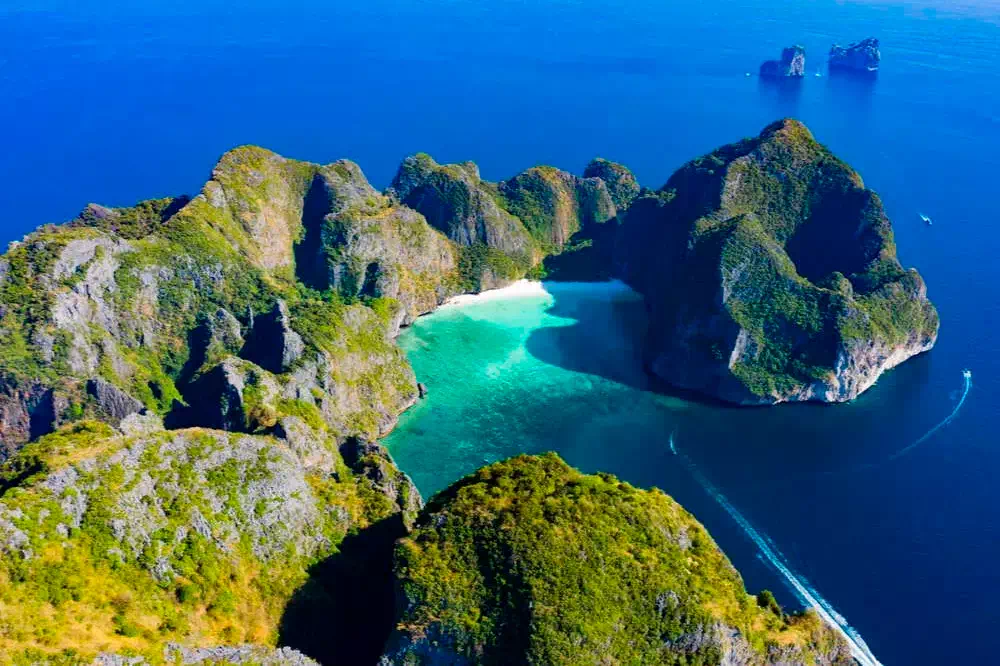
The first time most people see Phi Phi from the water, the cliffs come up so fast and so tall that cameras come out before the boat even slows down. A phi phi island tour from Phuket packs a lot into one day: a sea crossing, a famous bay, a lagoon, a cave, a beach full of monkeys and a lunch stop, all before you're back at your hotel for sunset. It's a long day, and a good one, if you know what you're walking into.
A typical Phi Phi day tour from Phuket is a 9-hour trip by speedboat that covers Maya Bay, Pileh Lagoon, Viking Cave, Monkey Beach, a snorkeling stop and lunch on Phi Phi Don island. It also includes hotel transfer both ways, a guide, drinks, fruit and snorkeling gear.
The order of stops can shift depending on tides, weather and how busy each site is that morning, so don't be surprised if the route does Maya Bay before Pileh Lagoon or the other way around. Guides adjust the plan to dodge the worst of the crowds, which usually works in your favor even if it means a slightly different day than the one described online.
Pickup happens early, usually well before 8am, because the pier transfer and the boat ride both take time before the group even reaches Phi Phi waters. Expect tea or coffee and a short briefing at the pier while everyone gathers and life jackets are handed out.
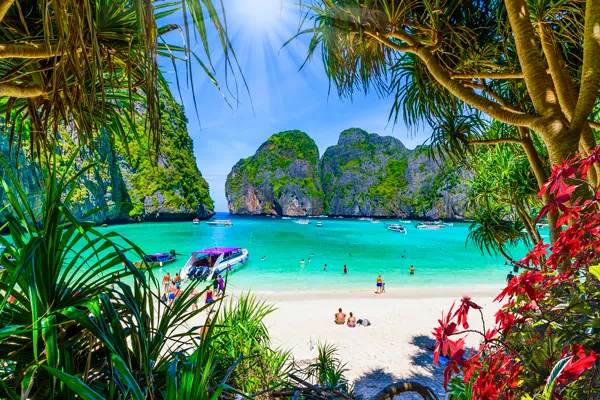
Once underway, the speedboat ride to Krabi province takes a good chunk of the morning, and this is the part people either enjoy or tolerate depending on how the sea is behaving that day. Maya Bay is often the first major stop, since boat traffic there is heavily managed and earlier arrivals mean fewer boats crowding the entrance.
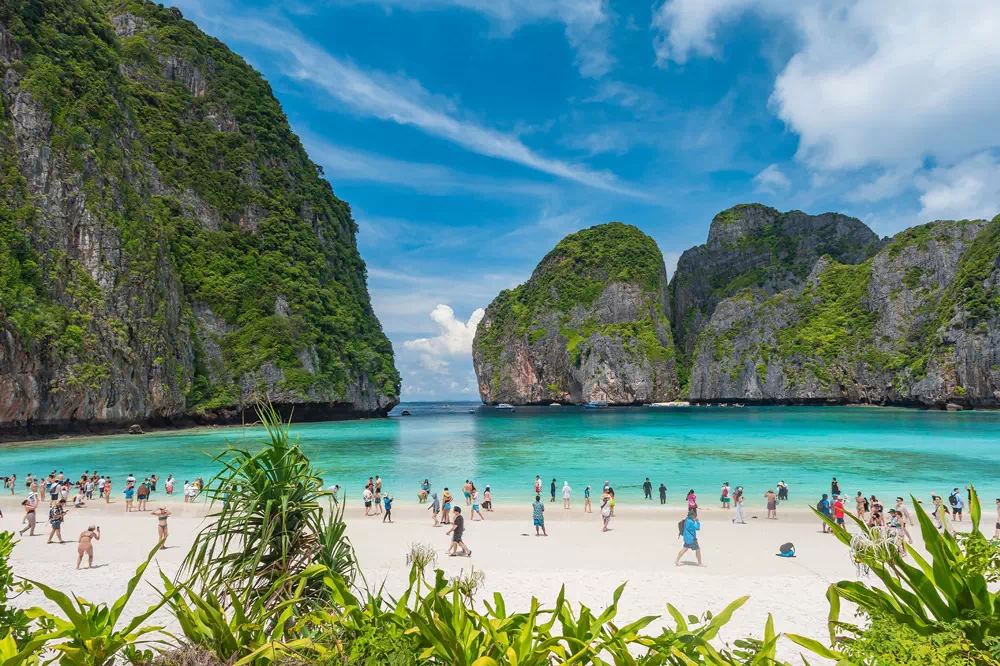
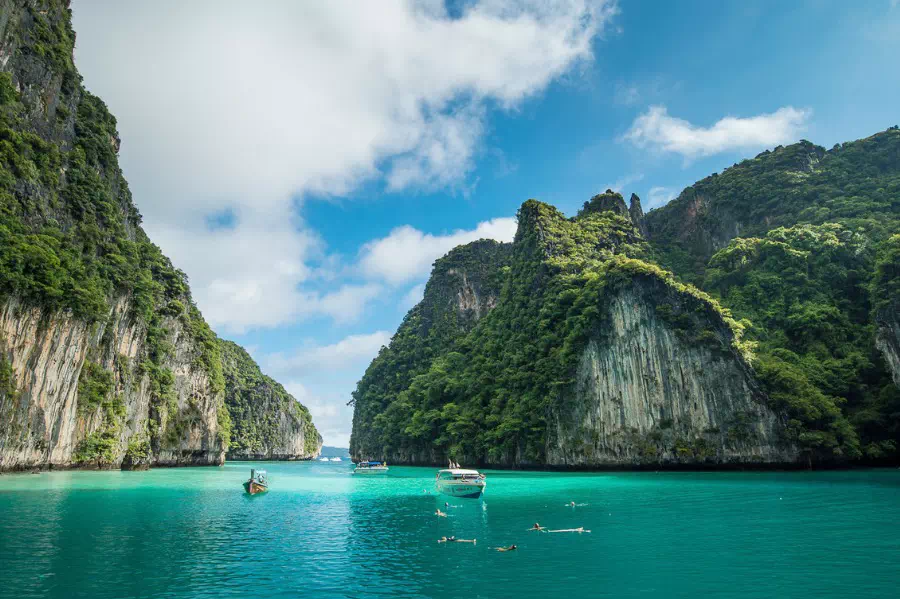
From there it's on to Pileh Lagoon, a short stop but one of the most photographed spots in the whole bay, with water so clear the limestone walls seem to glow underneath the surface. Then comes Viking Cave, where you'll hear about the swiftlet nests collected from the cave walls and sold for a famous Chinese delicacy, a detail that surprises most first-time visitors.
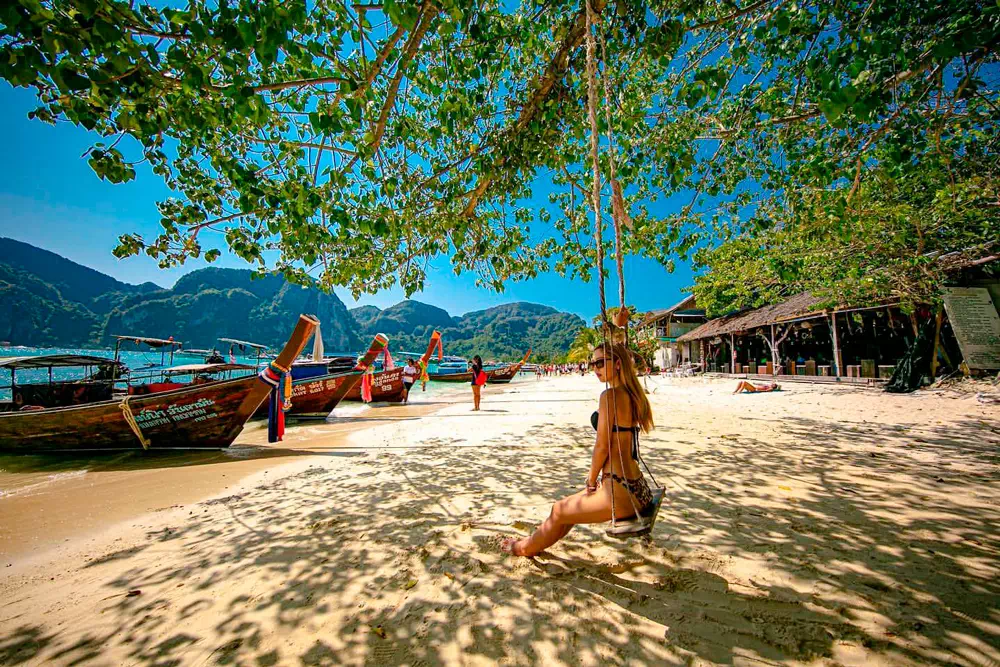
Monkey Beach comes next, home to a resident troop of long-tailed macaques who are used to visitors but still wild animals, so keep food and loose bags out of reach and don't try to pet them no matter how calm they look. Lunch is served on Phi Phi Don, the main island, where there's also some free time to walk around, grab a cold drink, browse the shops near the pier or just sit somewhere shaded and let the morning sink in.
The final stop is usually a swim or snorkel break at one of the smaller islands like Bamboo or Khai before the ride back to Phuket. By this point in the day the light is softer, the crowds have mostly thinned out, and it's often the most relaxed hour of the whole trip.
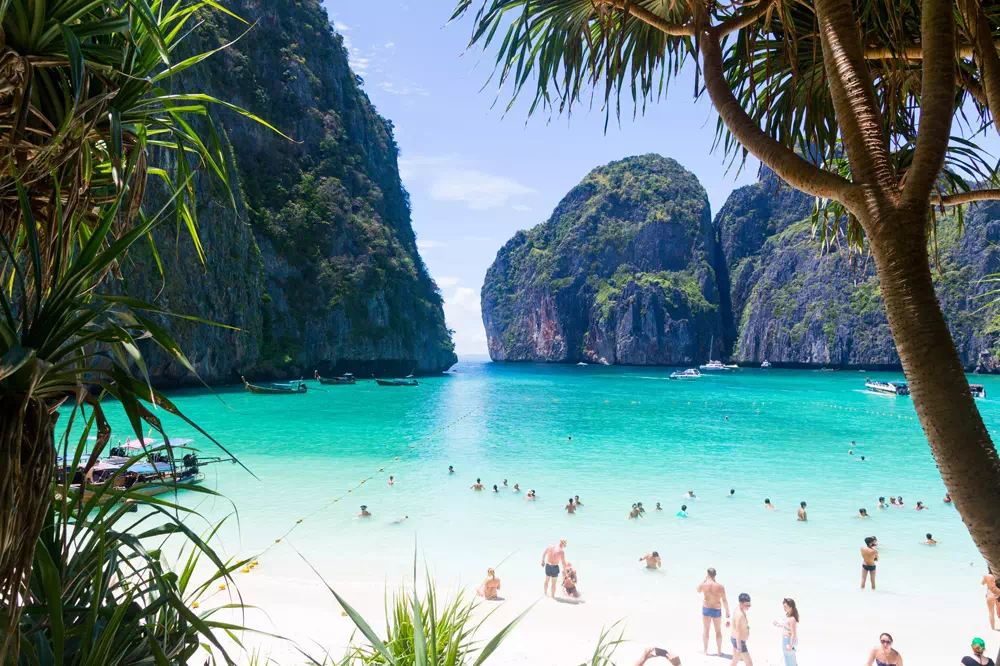
Yes, but go in with the right expectations: Maya Bay today is about the view and a shorter visit, not the wide-open swim-and-sunbathe day you may have seen in old photos. The national park limits time in the bay and controls how boats approach it, partly to let the reef and the beach recover after years of overuse.
Swimming directly off the main beach is restricted in some seasons, so check what's allowed on the day you go. The real value is the view from the water and the approach by boat, with those tall cliffs closing in around you, rather than a long stretch of sand time. Most people still say it's worth seeing once, even in its current, more managed form.
Phi Phi is one of the most visited day trips from Phuket, so yes, there will be other boats at every stop, sometimes a lot of them. Pileh Lagoon in particular can feel tight around midday when several tours converge at once, which is part of why timing the stops carefully matters so much for a good guide and a good operator.
The crossing itself can be rough. Sea conditions get choppier roughly from November through March when the northeast monsoon brings stronger wind and swell to this side of the Andaman Sea, and that stretch of open water between Phuket and Phi Phi gives the waves plenty of room to build. If you get seasick easily, take medication before boarding, not after you start feeling it, and try to sit toward the middle of the boat where the motion is less extreme.
| Concern | What to expect | What helps |
|---|---|---|
| Crowds at Maya Bay | Multiple boats queue for entry, especially midday | Early departure tours reach it first |
| Choppy crossing | Rougher Nov to Mar, calmer Apr to Oct generally | Seasickness tablets, sit mid-boat |
| Sun exposure | Little shade at most stops | Reef-safe sunscreen, hat, rash guard |
| Long day | Early pickup, late afternoon return | Pack light snacks, stay hydrated |
Most Phi Phi day tours from Phuket run on speedboats, which is why the tour covers so many stops in nine hours. A speedboat gets you there faster, leaving more time at each site, but it also means more bouncing around on a rough day, which matters if you're traveling with young kids or anyone prone to motion sickness.
Large ships move slower and feel steadier in choppy water, trading some flexibility for comfort. On the bigger ship version of this tour, the Sea Gypsy Village visit is dropped and lunch is served on board instead of ashore, which changes the rhythm of the day a bit. If smooth water matters more to you than ticking off every stop, a big boat day is the safer bet; if you want to fit in the village, the cave and every lagoon, go speedboat.
Pack light, because you'll be in and out of water and sun all day with limited space on board. A dry bag or a cheap waterproof pouch for your phone is one of the few things worth buying in advance, since there's nowhere dry to leave belongings once you're out on deck.
This tour suits travelers who want the classic limestone-and-lagoon scenery of southern Thailand and don't mind a long day for it. It's less ideal for families with very young kids, anyone with a bad back who struggles with speedboat bouncing, or travelers who get seasick badly and can't take medication in time.
If you want calmer water and fewer crowds, consider the islands closer to Phuket instead. The Racha, Coral and Maiton Islands tour covers similar snorkeling and beach time with a much shorter crossing, and those who prefer limestone scenery without the Phi Phi crowds often look at the Phang Nga Bay and Samet Nangshe tour or the James Bond Island tour instead, both of which sit closer to Phuket and keep the sea time shorter.
Book a departure that picks you up from your actual hotel area, since transfer times vary across the island and some zones have earlier cutoffs than others. Confirm snorkeling gear sizes in advance if you're traveling with kids, and check the current Maya Bay access rules on the day, as the park adjusts them from time to time depending on conditions and visitor numbers.
The crossing takes a good part of the morning by speedboat, since Phi Phi sits in Krabi province across open water from Phuket. Exact times depend on sea conditions and which pier the tour departs from, so check this when you book.
Swimming is restricted in parts of the bay under current national park rules, so most visits today focus on the view and a shorter stop rather than a long swim. Rules can change, so always check current conditions on the day you travel.
Many families do bring children, but the long speedboat ride, sun exposure and choppy seas in some months make it tougher for toddlers than older kids. If you're unsure, ask about the boat type and sea conditions before booking.
Conditions are generally calmer from around April through October, while the northeast monsoon from November to March brings more wind and swell to the crossing. Either way, some days are rougher than others regardless of season.
Life jackets are provided for snorkeling stops, so non-swimmers can still take part, but confidence in the water makes the experience more relaxing. Let the tour operator know in advance if you're not a strong swimmer.
Yes, the day usually ends with a stop at one of the smaller islands such as Khai, Bamboo or Maiton, depending on the day's route. These stops are generally calmer and less crowded than the main Phi Phi sites.
Phi Phi has the famous bay and lagoon scenery but means a longer crossing and bigger crowds, while Racha and Coral islands are closer with calmer water and less traffic. If the Phi Phi look matters to you, it's worth the extra travel time.
Yes, and it's a good idea if you have a mask that already fits you well, since shared gear is comfortable but generic. Shared masks and snorkels are provided as part of the tour if you don't want to carry your own.
Hotel pickup, insurance and a licensed local operator. Ask us anything on WhatsApp before you book.
Updated 17 October 2026.