

You Might Also Like
WhatsApp, Telegram +66-957-269-990
- info@gophukettours.com


A straight answer on how safe Phuket really is, which risks are real and which are hype, and the simple habits that keep you out of trouble on the road, in the sea and at night.

It is your first evening in Patong, a rental shop is offering you a scooter for the week with no questions asked, and the beach across the road has a red flag snapping in the wind. Those two small details tell you more about safety in Phuket than any crime headline. So, is Phuket safe? For most visitors, yes, and the honest version of that answer is what this guide is about.
I have lived on the island for years, and the list of things that actually hurt tourists here is short and predictable. Below I go through each one: what it looks like on the ground, how likely it is, and what to do about it.
Yes. Phuket is a generally safe holiday island, and the things that hurt visitors most are road accidents and the sea, not crime. The island lives from tourism, so police, hotels and ordinary locals have every reason to keep guests safe and coming back.

That does not mean nothing goes wrong. The bad stories I hear from friends and guests follow the same few patterns: a crash on a rented scooter, a swim on a red-flag day, an argument over a jet ski "scratch", a drink left alone on a bar table. None of these are random, and all of them are avoidable.
Petty theft exists, as in any resort. Phones get snatched from scooter baskets, and bags disappear from sunbeds while everyone is swimming. Keep valuables in the hotel safe, carry a photo of your passport for the day, and you have dealt with most of it.
Then there are the quiet risks that nobody puts in the news: sunburn, dehydration and stomach trouble from too much fruit shake and not enough water. They will not end your trip, but they can easily ruin two days of it. Here is the whole picture in one table.
| Risk | How common | What actually helps |
|---|---|---|
| Scooter accidents | The most common serious problem | Ride only with a licence and a helmet, or use taxis and booked transfers |
| Rip currents | Mainly west coast, roughly May to October | Swim near lifeguards, respect red flags |
| Rental and taxi scams | Fairly common in tourist areas | Photograph everything, agree prices first, book through a licensed agency |
| Drink spiking and night theft | Uncommon but real | Watch your glass, go out with friends, carry little cash |
| Sunburn and heat | Very common | Shade at midday, lots of water, a hat and sunscreen |
Honestly, it is the riskiest thing most tourists do here. If you do not hold a motorcycle licence, your travel insurance may refuse to pay for a scooter crash, and hospital bills on the island add up fast.
Phuket roads are not flat beach promenades. The hills between Patong, Karon and Kata are steep and winding, sand collects on the bends, and the first rain after a dry spell turns the surface slippery with oil. Add trucks overtaking on blind corners and tired riders coming home after midnight, and you can see why local hospitals treat so many foreigners with scraped legs and broken wrists.
Police run regular checkpoints for helmets and licences, and a fine is the mild outcome. The serious one is an insurance claim refused because you rode without the right licence category. Check your policy before you rent, not after.
If you still want to ride, rent from a shop that keeps a copy of your passport instead of the original, take photos of the bike from every side before you leave, and start with short daytime trips. Never ride after drinks. If you have never ridden a scooter at home, Phuket in high season is not the place to learn.
The alternatives are easy. Ride-hailing apps work across the island, hotel taxis cost more but are simple, and most tours on our site include a hotel transfer, so the longest drives of your holiday happen with a professional driver. If you want the fun of a motor without the traffic, an off-road quad ride on a closed trail is a far safer outlet, and our guide to the ATV jungle trails explains how that works.
The sea is dangerous mainly in the southwest monsoon. From roughly May to October, big swells hit the west coast beaches (Patong, Karon, Kata, Kamala, Surin) and rip currents form there on most days. In the dry season, roughly November to April, the same beaches are usually calm enough for small children.

A rip current is a narrow channel of water flowing back out to sea. It does not pull you under, it pulls you out. People get into trouble when they panic and try to swim straight back to the beach against it, which exhausts even strong swimmers.
If you are caught: stay calm, float, raise an arm to signal the lifeguards, and swim parallel to the beach until you are out of the current. Then come in at an angle. Teach this to your children before the first swim, not on the day you need it.
Red flags mean no swimming, full stop. Lifeguards work on the main beaches in the daytime, but quieter coves often have nobody watching, so the beautiful empty bay you found on a map is exactly where you should be most careful. Do not swim after drinks or after dark.
Boat trips follow the season too. In the monsoon, a speedboat ride can be bumpy and some days are cancelled for weather. That is a good sign, not a nuisance: a serious operator cancels when the sea is bad. The Similan Islands national park also closes every year from mid-May to mid-October, so the Similan Islands tour from Phuket runs only in the dry season.
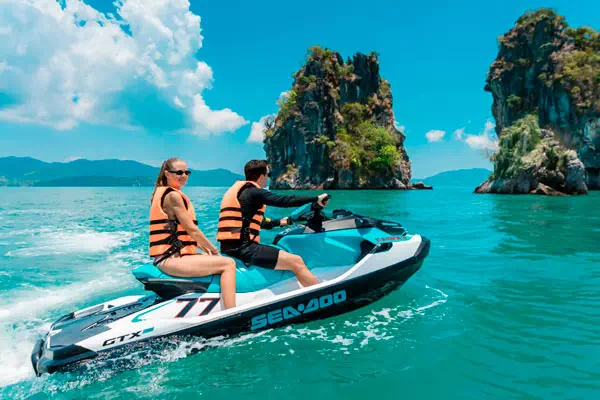
Most scams in Phuket are about money, not danger. The classic one is the beach jet ski "damage" claim, where a renter is blamed for old scratches and asked for a large payment. It is less common than it used to be, but it still happens on some beaches.

The fix is simple: do not rent jet skis from random beach operators, or if you do, film the whole machine with the owner watching. Organised tours with a fixed price, insurance and an instructor avoid the problem completely. Our article on how the jet ski scam works and how to ride safely goes through it step by step.
The other common traps are smaller but annoying:
None of this should make you paranoid. Most Thai people you deal with are honest and patient with confused tourists. A friendly smile and a calm "no, thank you" solves almost every situation; raised voices solve none.
Mostly yes, if you use normal big-city sense. Order your drinks yourself, watch them being poured, and never go back to a glass you left on the table. Drink spiking is not common, but it does happen in crowded nightlife areas.
Bangla Road in Patong is loud, crowded and mostly good-natured. The risks there are the usual ones: pickpockets in the crush, overpriced drinks, and people too drunk to make good decisions about getting home. Go with friends, agree on a meeting point, and keep only the cash you need for the night in your pocket.
Sharing buckets of cheap spirits with strangers is how many bad nights start. The alcohol is stronger than it tastes, the heat makes it hit harder, and the walk back to the hotel suddenly involves a dark beach road and a scooter you should not ride.
Getting home is the part to plan. Book a ride through an app or ask the bar to call a taxi, and agree the fare first. Walking alone along unlit beach roads at three in the morning is the one habit I would drop completely.
Book through a licensed agency and read what is included. A licence from the Tourism Authority of Thailand (TAT) is the first thing to check: it means the company is registered and answerable to the authorities. Go Phuket Tours holds TAT licence 44/00444, and the tours on our site are run by local licensed operators.

Next, look at the "included" list. On a decent island trip you should see hotel transfer, life jackets, accident insurance and a guide. The James Bond Island tour, for example, lists round-trip transfer, mask, snorkel and life jacket, guide, captain and crew, national park fees and accident insurance. If a cheap beach offer cannot tell you who runs the boat or whether you are insured, that is your answer.
Age rules are another quality sign. A responsible operator has them and sticks to them. On the ATV tour, for example, kids can ride their own quad from 8 years old and join as passengers from 4. If someone lets a ten-year-old drive anything just because you paid, walk away.
For a first trip, I suggest something gentle and close. Racha, Coral and Maiton suit families and nervous swimmers (shorter boat time, from ฿1090), Phi Phi suits people who want the famous views and do not mind crowds (from ฿1990), and James Bond Island suits anyone who prefers calm bay water and kayaking to open sea (from ฿1690).
Finally, trust weather calls. If a boat trip is moved or cancelled because of waves, a good agency rebooks you or refunds you. Grumbling about it is natural; pushing an operator to go out anyway is how people get hurt.
Yes, Phuket is one of the easier places in Southeast Asia to travel alone. Solo women travel here every day without trouble, and the main extra risk is late-night transport, not the daytime.

Thai culture is generally polite and non-confrontational, and harassment is less common than in many European party towns. Still, the same rules apply as anywhere: be careful who knows where you are staying, do not accept drinks from strangers, and trust your instinct if a situation feels off.
Here is what works well for solo travellers I know:
Solo male travellers face a different set of tricks, mostly in nightlife: overpriced bar bills and friendly strangers with a "special deal". The same calm "no, thank you" works here too.
Keep this short list on your phone. It covers almost every problem I have seen visitors run into:
Do these, and Phuket is about as safe as any big beach destination in the world. If you want to plan your days with transfers and insurance already sorted, browse all tours from Phuket on our home page and send a booking request or a WhatsApp message with any question.
No, locals do not drink it either. Bottled water is cheap and sold everywhere, and many hotels provide free bottles or a filter. Ice in restaurants and cafes is usually made from purified water and is fine.
In the daytime, Patong beach is fine for families, and in the dry season the water is usually calm. At night the area around Bangla Road gets loud and crowded, so many families prefer to stay in Kata, Karon or Kamala and visit Patong for an evening.
Macaques at viewpoints and temples can grab bags, food and sunglasses, and a bite needs medical attention. Do not feed them, keep food out of sight and do not smile at them with teeth showing. Watch small children closely around them.
Generally yes, and it is one of the best parts of the trip. Choose busy stalls where food is cooked fresh in front of you, and go easy on raw salads and seafood in your first days. Carry basic stomach medicine just in case.
Phuket was hit by the 2004 tsunami, and since then the island has warning towers and marked evacuation routes on the main beaches. Large tsunamis are very rare. Note the evacuation signs near your hotel and follow official instructions if a warning is ever issued.
Yes, it is strongly recommended. Private hospitals on the island are good but expensive, and a scooter crash or a dive injury can cost a lot. Check that your policy covers the activities you plan, including riding a motorbike.
Yes, as long as you respect the sea. Rain usually comes in short heavy bursts, but west coast beaches get strong waves and rip currents. Roads become slippery, so it is the worst time to learn to ride a scooter.
Hotel pickup, insurance and a licensed local operator. Ask us anything on WhatsApp before you book.
Updated 9 November 2026.