

You Might Also Like
WhatsApp, Telegram +66-957-269-990
- info@gophukettours.com


An honest local's guide to the five Phuket night markets most visitors ask about: which day each one runs, what it feels like, what to eat, how to bargain and how to fit one into a Phuket city tour day.

It is Sunday, the sun is going down behind Patong hill and you have one free evening left. You can eat at the hotel again, or you can drive across to Phuket Town, where the best Phuket night market of the week is filling an old street with grills, lanterns and hungry people.
Take the second option, but pick the right market for your night. They are not all the same: some are tourist souvenir rows, some are where local families actually eat dinner. Here is how they compare, which days they run and how to get the most out of one.
For atmosphere, go to the Old Town Sunday Walking Street; for size and cheap shopping, go to the Phuket Weekend Market. Both are in or near Phuket Town, so from the west-coast beaches plan an evening trip across the island. Chillva, Patong and Karon are good extras rather than the main event.
Market days in Phuket change now and then, and some markets pause for holidays or bad weather. The days below are the usual pattern; check on the day before you get in a taxi.
| Market | Area | Usually open | Best for | Skip it if |
|---|---|---|---|---|
| Old Town Sunday Walking Street | Thalang Road, Phuket Old Town | Sunday evening | Atmosphere, local snacks, crafts, photos | You hate slow crowds |
| Phuket Weekend Market (Naka) | Edge of Phuket Town | Saturday and Sunday evenings | Cheap clothes, souvenirs, huge food section | You want something calm and pretty |
| Chillva Market | Phuket Town | Several evenings a week, check days | Young local crowd, small fashion stalls, bars | You came mainly for souvenirs |
| Patong night markets | Patong, near Banzaan and the beach road | Most evenings | Seafood, quick dinner near your hotel | You want local prices |
| Karon Temple Market | Karon temple grounds | Usually Tuesday and Friday evenings | Easy family evening, simple Thai food | You expect a big market |
If you only have one evening and it is a Sunday, choose the Walking Street. On a Saturday, choose the Weekend Market. On any other day, Chillva or the market closest to your hotel is the sensible pick.
Yes, if you want to shop and graze cheaply in one place. The Weekend Market, also called Naka Market, usually runs on Saturday and Sunday evenings and is the largest night market on the island.
The layout is simple: rows of covered stalls with clothes, bags, sunglasses, phone cases, souvenirs and household bits, plus a big food area and a second-hand section with old cameras, vinyl and odd collectables. It is not glamorous, but it is where a lot of Phuket residents do their weekend shopping.
Come hungry. The food section is the best part: grilled skewers, fried chicken, sushi stalls, fresh fruit, coconut ice cream, roti and stalls selling whole fried fish. Buy small portions from many places instead of one big plate from the first stall you see.
The downsides are real. It gets hot and crowded between the rows, the floor can be muddy after rain, and many clothes stalls sell the same things. Go early in the evening, before the peak, and wear comfortable shoes.
My rule here: buy T-shirts and souvenirs at the Weekend Market rather than in Patong. The same items are usually cheaper here, and you get the food tour thrown in.
It is the prettiest Phuket night market and the best one for food and photos. Every Sunday evening, Thalang Road in Phuket Old Town closes to cars and fills with food stalls, crafts and street performers. Locals call it Lard Yai, the big market.

The setting is what makes it special. The street is lined with old Sino-Portuguese shophouses in pastel colours, many of them now cafes and small shops. Under the lanterns, with grills smoking in front of them, it feels very different from the beach side of the island.
This is the place to try Phuket's own food: Hokkien-style noodles, small Peranakan sweets, grilled squid, dumplings and fresh juices. There are also handmade soaps, art prints, local coffee and small gifts that you will not find in the souvenir rows of Patong.
It gets very crowded, and you move at the speed of the people in front of you. That is part of the experience, but families with prams or anyone who dislikes crowds should come right at the start of the evening and leave early.
Use the side streets. When Thalang Road feels too packed, turn into Soi Romanee or the lanes towards Dibuk and Krabi roads for a quieter look at the old town, then come back for dessert.
Chillva is worth it if you want to see where young Phuket spends its evenings, less so if you are looking for souvenirs. It is a smaller, more relaxed market in Phuket Town, with stalls in stacked shipping-container style units, street food and small bars.

The crowd is mostly Thai students and young locals, which gives it a different energy from the tourist markets. You find independent fashion, second-hand clothes, accessories, and food trucks with burgers and Thai-Western mixes next to classic grilled skewers.
The days it opens and the mix of stalls change more often than at the big markets, so check that it is open on your night. On a slow weekday it can feel half empty.
The best way to use Chillva is as part of a Phuket Town evening: sunset at Rang Hill, dinner at Chillva, a drink in the old town afterwards. If you are already making the trip across the island, it is a nice addition. I would not drive from Kata just for Chillva alone.
Mostly yes. The beach-area markets are convenient and lively, but prices are higher and the stalls are more tourist-focused than in Phuket Town.

In Patong, the night market next to Banzaan Fresh Market and the stalls around the beach road are where many people eat seafood. You choose fish, prawns or crab on ice and they cook it for you. Check the price per kilo and the weight before they cook, and agree on how it will be prepared.
Patong's markets are a quick, easy dinner if your hotel is there. They are not the place for bargains, and the souvenir stalls repeat the same items from one end of town to the other.
Karon Temple Market usually runs on Tuesday and Friday evenings in the temple grounds. It is small and friendly, with simple Thai dishes, desserts, fruit and a handful of clothes and souvenir stalls. Families staying in Karon or Kata like it because you can walk there, eat well and be back before the kids get tired.
Neither market is worth crossing the island for. They are good neighbourhood options, nothing more, and that is fine.
Eat Phuket's local dishes first and save the pad thai for another day. Food stalls at night markets are cheap, so the smart move is to share many small things rather than order one big meal.
My shortlist for a first visit:
Pick stalls with a queue of Thai customers and food cooked fresh in front of you. A busy stall turns its food over fast, which is the best hygiene guarantee a market can give.
If you do not eat spicy food, learn "mai phet" (not spicy) and say it with a smile. Many dishes come with chilli on the side anyway, so you can add your own.
Bring a small pack of tissues and some hand gel. Bins and seats are not always easy to find, and you will be eating with your fingers more than you expect.
Bargain gently for clothes and souvenirs, never for food, and pay in cash. Getting to the Phuket Town markets from the west-coast beaches takes a taxi or ride-hailing car, so plan the trip there and back before you set out.

A few rules that keep bargaining friendly:
For transport, ride-hailing apps are the easiest option from Patong, Kata or Karon to Phuket Town. Tuk-tuks and taxis also work; agree the price before you get in. Fares change, so check on the day.
The return trip is the part people forget. Around closing time many visitors leave at once and cars get scarce near the bigger markets, so either book your ride back a little early or walk a few streets away from the crowd before you call one.
Keep your phone and wallet in a front pocket or a zipped bag. Phuket's markets are generally safe, but crowded lanes are crowded lanes everywhere.
Yes, and it is one of the easiest ways to see the island in one day: sights in daylight on the tour, then a market in the evening. The Phuket City Tour costs from ฿1090, lasts 6 hours and includes round-trip hotel transfer.

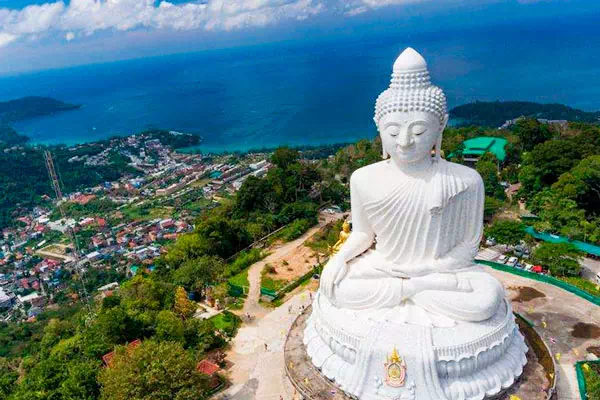
The tour visits viewpoints over Kata and Karon, Promthep Cape, the 45-metre Big Buddha, Wat Chalong, Muay Thai Street, the Sino-Portuguese streets of Phuket Old Town, a local market, Rang Hill and a walk in Patong with Banzaan Fresh Market. Drinks and a guide are included, and you see the real Phuket without being pressured to shop.
The day works as a scouting trip. You see the old town streets in daylight, learn where things are, and then come back in the evening on your own for the Walking Street or the Weekend Market when the timing fits.
A few tips for the tour day: bring clothes that cover knees and shoulders for the temples, a photocopy of your passport, sunscreen and a hat. Eat a light lunch, because you will want space for the market later.
The city tour suits first-time visitors, families and anyone who wants Phuket's culture and viewpoints in one easy day with hotel pickup. If you would rather spend the day at sea and keep the evening for a market, the top 5 Phuket tours list helps you pick a boat trip.
A simple plan for a market evening:
All other day trips, from the islands to the jungle, are on the Go Phuket Tours home page, with a booking request form on each tour page.
The Old Town Sunday Walking Street on Thalang Road is the best introduction: old shophouses, local food and crafts in one walk. If you are not in Phuket on a Sunday, the Weekend Market on Saturday evening is the next best choice. Both are in or near Phuket Town.
In the beach areas, especially Patong, there are market stalls most evenings. The bigger and more interesting markets in Phuket Town run on fixed days, mainly at the weekend. Check the day before you go, because schedules can change.
Arrive around sunset, when the stalls are open but the crowds have not peaked. Food stalls can sell out of popular dishes later in the evening. Arriving early also makes the trip back easier, before everyone leaves at once.
Yes, with a little effort. Fruit, roti, sticky rice desserts, corn, spring rolls and many noodle dishes can be made without meat. Learn the word "jay" (vegan, used in Thai vegetarian food) and look for the yellow flags some vegetarian stalls display.
Mostly no. Some stalls accept Thai QR payments, but tourists should plan to pay in cash. Bring small notes and keep larger ones in a separate pocket.
Yes, especially the smaller ones like Karon Temple Market and the start of the Walking Street. Bring water and wet wipes and set a meeting point in case you get separated. Large crowds late in the evening are harder with small children, so go early.
Light clothes and comfortable closed shoes or sturdy sandals, because the ground can be wet or uneven. If the market is in temple grounds, as in Karon, cover your shoulders. A small cross-body bag is easier and safer than a backpack in the crowd.
Hotel pickup, insurance and a licensed local operator. Ask us anything on WhatsApp before you book.
Updated 13 November 2026.