


You Might Also Like
WhatsApp, Telegram +66-957-269-990
- info@gophukettours.com


A month by month look at Phuket's weather, sea, crowds and prices, with honest advice on which tours to book in each season and why the rainy months are often better than their reputation.

A friend messaged me last week: flights to Phuket in September are half the price of January, is it a terrible idea? It is not, but it is a different trip. The best time to visit Phuket depends on what you want from the sea, how you feel about heat, and how much you care about crowds and prices.
Below I go month by month through the three seasons, explain what the sea really does, and match the tours to the months when they work best. I have lived through enough monsoons here to be honest about both sides.
For most people, the best time to visit Phuket is from November to April, when the northeast monsoon brings dry weather and calm seas on the west coast. December to February is the sweet spot for comfort, but also the busiest and most expensive period.

Phuket really has three seasons. The cool and dry season runs from about November to February. The hot season follows from March to May. The southwest monsoon, often called the green or rainy season, runs from about May to October.
Those borders move a little every year. Some years the rain hangs on into November, some years May is still sunny and calm. Treat the dates as a guide, not a promise.
If calm sea for island trips is your priority, aim for December to April. If you care more about price, space on the beach and green scenery, the rainy months can be the smarter choice.
Here is the short version for every month. "Sea" means the west coast beaches like Patong, Karon and Kata, which are the most affected by the monsoon; the east coast and Phang Nga Bay stay calmer all year.
| Month | Season | West coast sea | Crowds and prices | Good for |
|---|---|---|---|---|
| January | Dry, pleasant | Calm, clear | Very busy, high | Beaches, Similans, Phi Phi |
| February | Dry, pleasant | Calm, clear | Busy, high | Similans, diving, island hopping |
| March | Hot, dry | Calm, clear | Busy, easing | Diving, snorkelling, Similans |
| April | Hottest | Mostly calm | Busy around Songkran | Islands early in the day, water parks |
| May | Change of season | Waves start | Quiet, lower | Last Similan trips before closing, Phang Nga |
| June | Rainy season | Rough, red flags | Quiet, low | Khao Sok, rafting, Phang Nga Bay |
| July | Rainy season | Rough, red flags | Some summer holiday crowds | Inland tours, James Bond Island |
| August | Rainy season | Rough, red flags | Some summer holiday crowds | Zipline, ATV, rafting |
| September | Often the wettest | Rough | Quietest, lowest | Budget stays, spa days, inland trips |
| October | Rainy, drying out | Rough, then calming | Quiet, rising late in the month | Similans reopen mid-month |
| November | Dry season begins | Calming, clear | Rising | Everything, good value early on |
| December | Dry, pleasant | Calm, clear | Peak at Christmas and New Year | Beaches, islands, celebrations |
Two months are underrated. Early November gives you dry weather and calm seas before the big Christmas crowds arrive. Late April and early May are hot, but often still calm, and the island empties out.
Two periods need booking early: Christmas to New Year and the Chinese New Year holidays. Hotels and tours fill fast, and prices for rooms go up sharply.
The dry season is Phuket at its easiest: sunny days, low humidity by tropical standards, calm turquoise sea on the west coast and almost every tour running. It is also when everyone else is here.
This is the season to swim off the main beaches, take a speedboat to Phi Phi or the Racha islands, and plan the Similans. The sea is flat enough that even people who get seasick usually manage the island trips without trouble.
The downside is crowds. Patong, Kata and the famous viewpoints are full, boats at Phi Phi line up in the popular bays, and restaurants in the beach towns get busy. Book the most popular tours a few days ahead.
December to February is the only time when almost nothing in Phuket depends on the weather. If this is your first trip and you want the classic beach holiday, this is the season to choose.
November has a special evening worth planning for: Loy Krathong, on the full moon of the twelfth Thai month. People float small decorated baskets with candles on the sea, lakes and ponds, and the beaches fill with families. It is gentle, beautiful and free to join.
The dry season is not perfect either. Early in the season a late storm can still roll through, and by February the midday sun is already strong. Bring a hat, take shade seriously and do not underestimate how quickly you burn on a boat deck.
The Racha, Coral and Maiton islands tour from ฿1090 is a gentle first island day in this season, with short boat rides and easy snorkelling.
Yes, especially for divers and snorkellers. March and April often bring the clearest water of the year and calm seas, but the heat in the middle of the day is intense and sunburn happens fast.
The trick in the hot season is to live like a local: be on the water or at the beach early, retreat to shade, a pool or a nap at midday, and go out again in the late afternoon. Island tours that start early in the morning suit this rhythm well.
April has Songkran, the Thai New Year, in the middle of the month. For a few days the whole island turns into a water fight. It is great fun if you join in, less fun if you want to stay dry, so keep your phone in a waterproof pouch.
For divers, this is often the best stretch of the year. The water is warm, the sea is usually flat in the mornings, and the sites around Phuket and the Similans are at their clearest. If you have wanted to try a first dive, March and April are a good time to do it.
May is the month of change. Some days are still calm and sunny, others bring the first storms and waves. Hotel prices drop, the island gets quiet, and it is your last chance for the Similans before they close.
The Similan Islands National Park is open from 15 October to 15 May and closed for the rest of the year. Tours run only in the season, so if the Similans are on your list, they decide your dates.

The park closes during the southwest monsoon to protect the reefs and because the open sea gets too rough for safe trips. The archipelago is about 100 km northwest of Phuket, so the crossing is long and needs calm conditions.
The Similan Islands tour from Phuket is an 11 hour day from ฿2790. It starts with a minivan transfer to Thap Lamu Pier in Phang Nga, then a speedboat to several snorkelling stops, the Sail Rock viewpoint above Donald Duck Bay on Similan Island and lunch on Koh Miang.
It is a long day with an early start, but it is the best snorkelling within reach of Phuket. Book it for the middle of your stay, so a rough day can be moved to another date. For what the day is really like, read the honest Similan Islands day trip guide.
In the dry season the Similans suit keen snorkellers who want the clearest water, while the Racha islands suit families and anyone who prefers a shorter, easier day at sea.
Yes, for many travellers. The rainy season brings waves on the west coast and some wet days, but rain usually comes in heavy bursts followed by sunshine, and you get lower prices, fewer people and a very green island.
What changes most is the sea. On the west coast beaches, the southwest monsoon brings surf and strong currents. Red flags go up often, and they mean it: every year people drown off Phuket's beaches during these months. Swim only where lifeguards say it is safe.
Rain itself is less of a problem than people fear. A typical day can be bright in the morning, a dramatic downpour in the afternoon, then a clear evening. There are also grey days with steady rain, more often in September, so keep some flexible plans.
Here is what still works well in the rainy season:
Island tours to Phi Phi still run in the rainy season, but some days are cancelled for safety, and the crossing can be bumpy. Book them early in your stay so there is time to reschedule.
The best rainy season tours are the ones that do not depend on open sea: Phang Nga Bay, Khao Sok, rafting and the inland adventures. They run most of the year and often feel better without the dry season crowds.

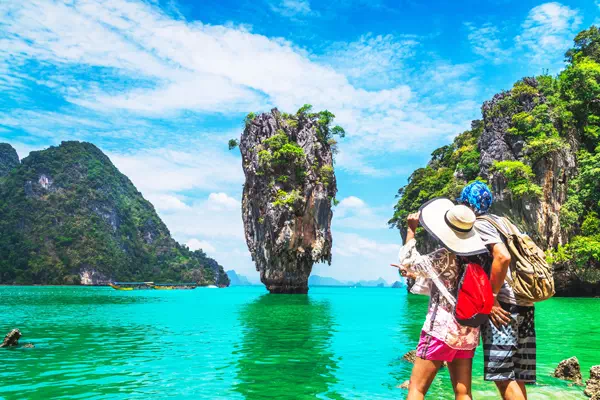
The James Bond Island tour from Phuket from ฿1690 is my first pick for a cloudy day. Koh Tapu in Phang Nga Bay looks dramatic in any light, and kayaking through the caves and mangroves works well when the open sea is rough.
Khao Sok is the other star of the green season. The Khao Sok and Cheow Lan Lake tour is a 13 hour day from ฿2290 and it is long but rewarding, with limestone peaks rising from the lake and floating bungalows on the water.

For adrenaline, rafting in Phang Nga from ฿1090 is a good use of a wet day. You will be soaked within minutes anyway, and the jungle on the riverbanks is at its brightest.
Each of these suits a different traveller: James Bond Island for scenery lovers, Khao Sok for nature fans who do not mind a long day, and rafting for active groups.
Decide first what matters most, calm sea, low prices or a specific trip like the Similans, then pick the season around it. After that, a few simple habits make any month work.

Pack for the season too. In the dry and hot months, think reef safe sunscreen, a hat, a light long sleeve shirt for the boat and sandals. In the rainy season add a light rain jacket, a dry bag for your phone and shoes that do not mind getting wet. Umbrellas are cheap in any convenience store if you forget one.
If you are prone to seasickness, travel in the dry season or stick to sheltered trips like Phang Nga Bay in the rainy months. Take your tablet before the boat leaves, not when you start to feel unwell, and sit at the back where the motion is softest.
Weather forecasts for Phuket are often too pessimistic: a rain icon for the whole day usually means a storm or two, not a washout. Look out of the window rather than at the app, and keep plans flexible.
You can see every trip with its season notes on the Go Phuket Tours home page. Ask on WhatsApp or through the booking request on a tour page if you are unsure whether a tour runs on your dates.
The rainy season from June to October is usually the cheapest, with September often the quietest month. Hotels drop their rates and many offer deals for longer stays. Flights can also be cheaper outside European and Asian holidays.
Usually not. Rain tends to come in heavy showers or storms, often in the afternoon, with sunny spells in between. There are a few grey days with steady rain, so keep a couple of indoor or inland plans ready.
You can swim in pools and in sheltered spots, but the west coast beaches often have big waves and strong currents. Always check the flags and never swim when the red flag is up. Island tours to calmer bays are a safer way to get in the sea.
April is usually the hottest month, with March and May close behind. The midday sun is strong, so plan beach and tour time early in the morning and late in the afternoon. Drink plenty of water and reapply sunscreen often.
October is a mixed month: the first half is often still rainy, while the second half starts to dry out. The Similan Islands reopen on 15 October, and prices are still lower than in high season. It is a good choice if you are flexible.
Songkran, the Thai New Year, takes place in mid-April. For a few days there are water fights in the streets, especially in Patong and Phuket Town. Protect your phone and expect to get wet anywhere outdoors.
Sea tours can be cancelled or changed on rough days, more often in the rainy season. Safety comes first, and the operator decides on the day. That is why it is wise to book sea trips early in your stay and keep inland tours as a backup.
Hotel pickup, insurance and a licensed local operator. Ask us anything on WhatsApp before you book.
Updated 6 November 2026.