You Might Also Like
WhatsApp, Telegram +66-957-269-990
- info@gophukettours.com


What it is really like to be paddled through the sea caves, hongs and mangroves of Phang Nga Bay, and how to plan the day so tides, sun and a wet phone do not spoil it.
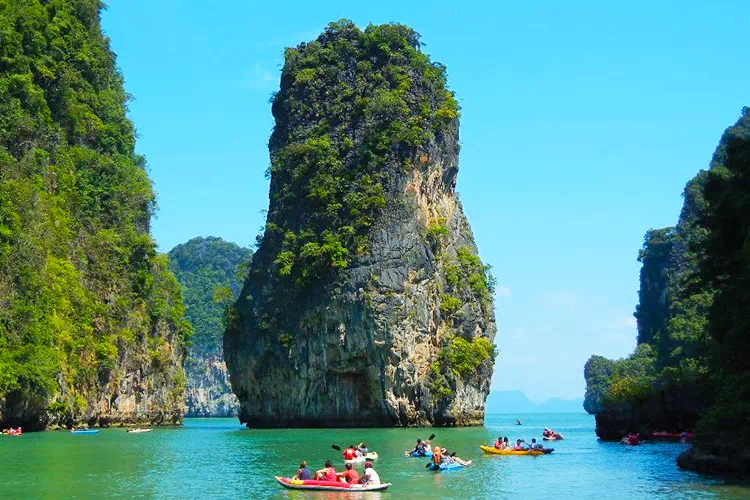
The boat cuts its engine, the inflatable canoes go over the side, and a quiet man in a faded cap motions for you to lie back. Ahead is a dark slot in a cliff, barely higher than the canoe. A Phang Nga Bay sea canoe trip is that moment, the few seconds of cool darkness before the rock opens into a hidden lagoon full of green light.
It is one of my favourite things to send friends to do from Phuket, and also one of the most misunderstood. People expect hard paddling, open sea or a sporty kayak. In reality it is gentle, quiet and mostly about looking up.
A hong is a lagoon hidden inside a limestone island, open to the sky and reached through a cave or tunnel at sea level. "Hong" means "room" in Thai, and inside these islands the caves and lagoons really do feel like rooms with walls of rock.
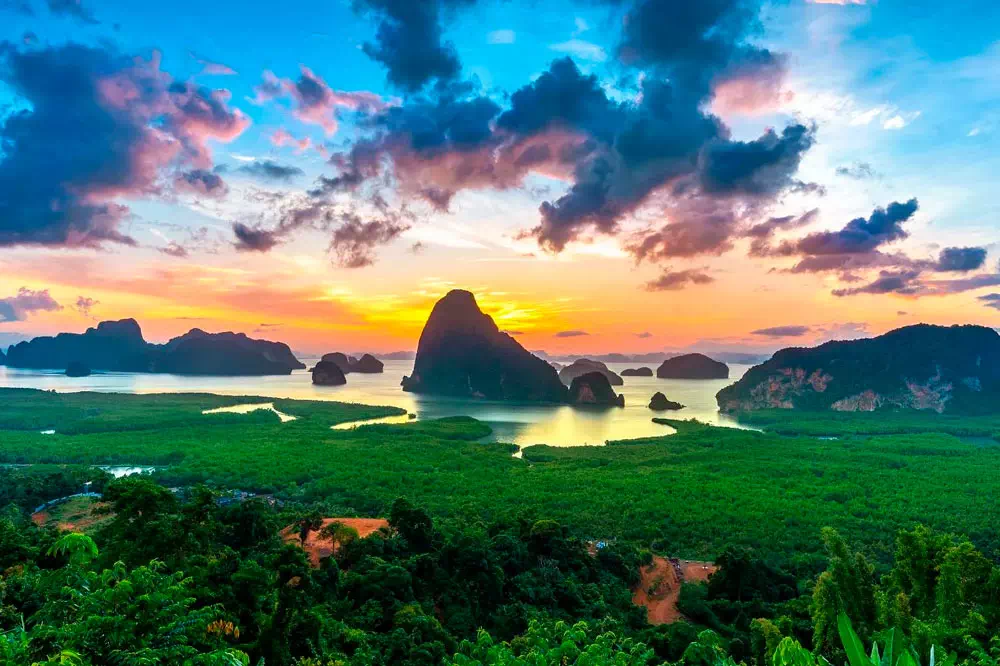
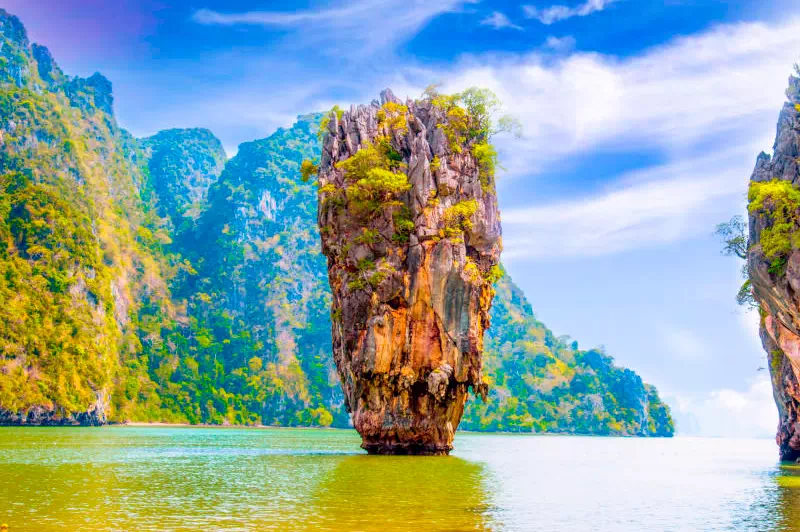
Phang Nga Bay is full of limestone towers that rise straight out of the sea. Over a very long time, rain and seawater ate into the soft rock and hollowed some of these islands from the inside. When the roof of a big cave collapses, you get a hong: a pool ringed by cliffs, with jungle hanging over the edges.
From the outside, a hong island looks like any other lump of rock. You only find out what is inside when you slip through a low tunnel. That surprise is the whole point, and no photo really prepares you for it.
Inside, the water is usually still and the sound changes completely. You hear birds, dripping water and the paddler's oar, not engines. Look at the cliff walls: roots, ferns and sometimes monkeys moving along the ledges.
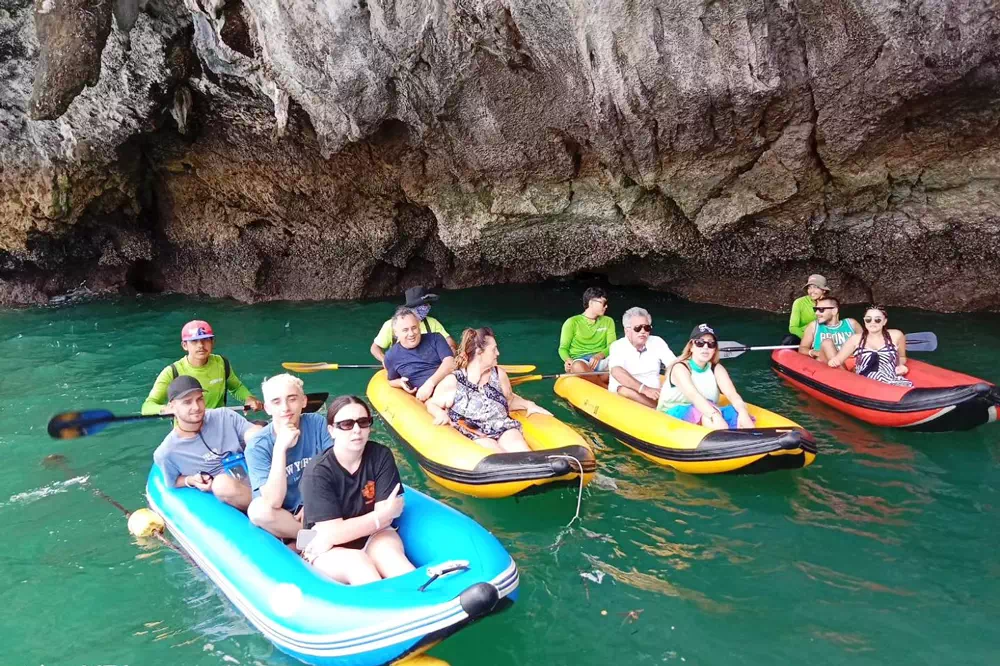
You sit in an inflatable canoe while a local paddler at the back steers and does most of the work. No paddling skill, fitness or experience is needed, and you can simply sit back and look.
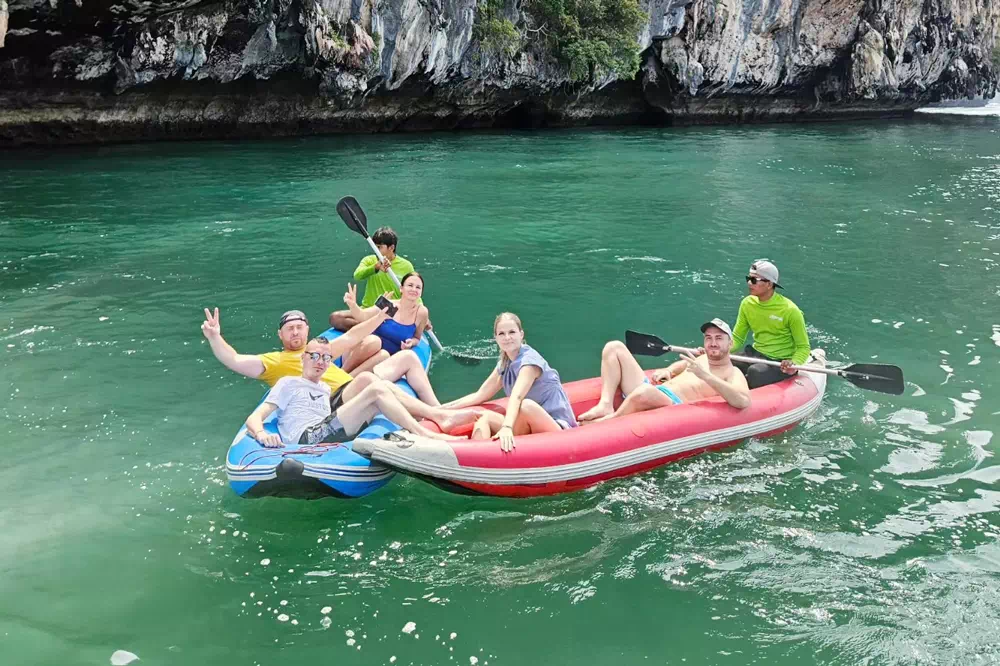
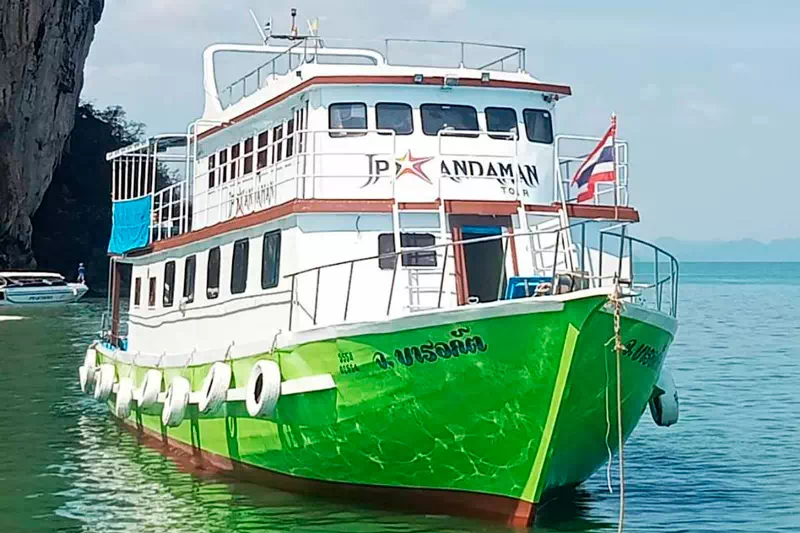
The big boat anchors near the island and the canoes are tied alongside. You step down into the canoe with help from the crew, which takes a little balance but is not difficult. Then the paddler pushes off and heads for the cliff.
Going through a tunnel is the fun part. Your paddler will tell you to lean back or lie flat, and on some passages your nose is not far from the rock above. It lasts seconds. Then the cave opens and you come out into the lagoon.
The paddlers are locals who know these passages very well, and many of them are relaxed, funny and happy to point things out. A small tip at the end is a kind gesture if you enjoyed it. Keep a little cash in your dry bag for that.
Expect the canoe part of each stop to be fairly short. It is not an all-day paddle. It is a slow, quiet break between boat rides, and that is exactly why it suits so many people.
On the James Bond Island Tour from Phuket, the canoe stops are Panak Island and Hong Island. Panak has the Bat Cave and tunnels, and Hong Island has room-like caves and mangrove channels.
Here is how the day runs, in the order the tour page lists it:
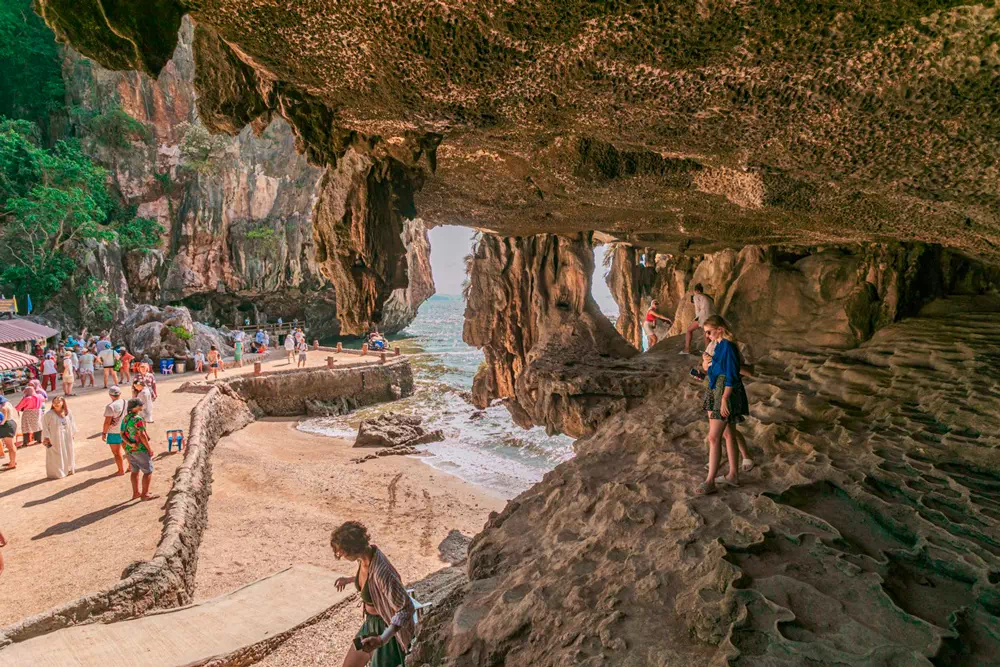
One honest detail: on the large ship option, the Panyee village visit is not included and lunch is served on board. If walking through the village matters to you, ask which option you are booking before you pay.
For more on the James Bond part of the day, including crowds and timing, we have a separate full honest guide to the James Bond Island tour. Here I am sticking to the water.
The tide decides whether a cave tunnel can be passed, because at high water the gap under the rock can close and at low water the passage can run too shallow. That is why the crew, not the printed itinerary, decides the order of the stops on the day.
Phang Nga Bay has a noticeable tidal range. A tunnel that is easy at mid tide can be impossible a few hours later. The boat crews know this and juggle the route so they arrive at each cave when the water is right.
So if your morning starts with James Bond Island rather than Panak, do not worry. It usually means the tide is being respected. On the odd day, a particular tunnel may be skipped or swapped for another channel. That is nature, not a broken promise.
Tides also change the mangroves. At lower water you see the tangle of roots, crabs and mudskippers on the mud. At higher water the canoe floats deeper in among the trees and the channels feel narrower and greener.
One practical point: low tide can mean mud at the beach stops and a longer wade from the boat. Keep your sandals on until you see where you are stepping.
Wear swimwear under light quick-dry clothes, because you will get splashed and probably sit in a little water at the bottom of the canoe. Your phone needs a proper waterproof pouch or dry bag, not a plastic bag from the hotel.
My clothing list for a canoe day:
For phones, a clear waterproof pouch on a lanyard around your neck is the best tool. You can take photos through it, and if you drop it, it stays on you instead of sinking. Test it in the hotel sink the night before.
A big camera is fine if you have a real dry bag and you are happy to keep it inside except for quick shots. Inside the caves the light is low, so do not expect perfect photos. Honestly, put the phone away in the tunnels and just enjoy that part.
Leave jewellery and anything precious at the hotel. A ring that slips off in a hong is gone for good.
It suits almost everyone: families, couples, older travellers and people who cannot swim well, since you wear a life jacket and a local paddler is in charge. The main people who should think twice are those who struggle with tight spaces or with stepping between boats.
Children usually love the tunnels, the monkeys and the feeling of exploring. Older travellers like that nobody expects them to paddle hard. People who get seasick often find the canoe part the most comfortable of the day, because the water inside the lagoons is calm.
Who might not enjoy it? Anyone claustrophobic may find lying flat under a low rock roof stressful. If that is you, tell the paddler, they can skip a tight passage or wait outside. People with limited mobility should know that stepping down from the big boat into a soft, moving canoe takes some balance and help.
It is also a long day. Pickup is early, between 07:00 and 08:30, and the tour runs about 8 hours. Small children get tired, so bring snacks and something to keep them busy on the boat.
And if you are the active type who wants to paddle hard for hours on your own, be honest with yourself: this is not that. A Phang Nga canoe trip is about scenery and silence, not sport. Go for the hongs, the cliffs and the light, and you will come back happy. Go expecting a workout, and you may feel the day is slow between the stops.
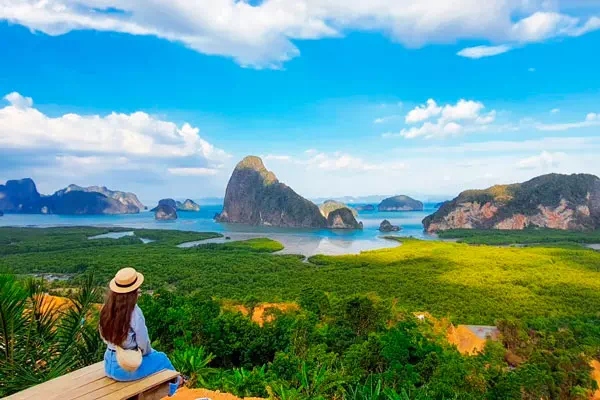
If canoeing through caves is the reason you are going, book the James Bond Island tour. The Phang Nga Bay and Samet Nangshe tour has no canoe, and instead gives you a viewpoint over the bay, temples and a longtail ride through mangroves.
The two days look similar on a map but feel very different. One is mostly on the water. The other is mostly on land, with a minibus, a pickup truck ride to the viewpoint and a longtail boat for the mangroves.
| What you get | James Bond Island Tour | Phang Nga Bay and Samet Nangshe |
|---|---|---|
| Price from | ฿1690 (tourist ship) | ฿1890 |
| Length | 8 hours | 10 hours |
| Canoeing through caves | Yes, Panak and Hong Island | No |
| Mangroves | By canoe at Hong Island | By longtail boat |
| James Bond Island | Yes, from the boat | No |
| Other highlights | Panyee village (not on the large ship option), beach stop | Samet Nangshe viewpoint, Suwan Kuha cave temple, Black Monk Temple, elephants, waterfall, airplane beach |
| Lunch | Buffet included | Included |
My honest pick: first trip to Phuket and you want the classic bay from the water, go with the James Bond Island Tour from Phuket. If you have already been on the water, or someone in your group hates boats, the Phang Nga Bay, Samet Nangshe and Airplane Beach tour shows the bay from above, which is just as beautiful in a different way.
Here are both, depending on what kind of day you want:
Torn between Phang Nga and a Phi Phi day instead? Our comparison of Phi Phi or James Bond Island walks through that choice.
Book a day or two ahead, pack for water and sun, and accept that the crew will shuffle the stops around the tide. Everything important, from life jacket to park entrance fees, is already in the tour price.
The James Bond Island tour includes the round-trip hotel transfer, non-alcoholic drinks, mask, snorkel and life jacket, the guide, captain and crew, national park entrance fees, accident insurance, fresh fruit and a buffet lunch. You only need cash for tips, drinks you buy yourself and small souvenirs.
For the Samet Nangshe tour, bring a towel, swimwear for the waterfall, and a copy or photo of your passport, as the tour page asks. Pickup there is earlier, around 06:30 to 07:00.
Whichever day you choose, send the booking request on the tour page or message us on WhatsApp with your hotel and the number of people. The rest of the Phuket tours are on the home page if you want to build a few days around it.
Usually not. A local paddler sits at the back, steers and does most of the paddling, so you can sit back and enjoy the caves. You are welcome to help if you like.
Yes. Life jackets are included and the water inside the hongs is calm. Tell the crew if you cannot swim, so they know to keep an eye on you when you step in and out of the canoe.
Most children love it, especially the tunnels and the monkeys. The bigger challenge is the long day, with pickup between 07:00 and 08:30 and around 8 hours in total, so bring snacks and sun protection.
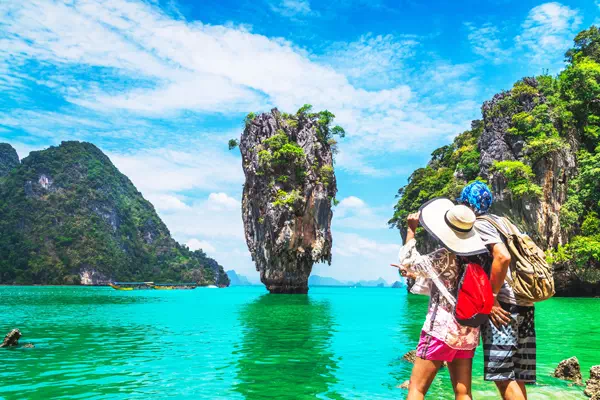
No. Walking on Koh Tapu is prohibited because it is protected as part of a national marine park. You see it from the boat or from neighbouring Khao Phing Kan, which is about 40 metres away.
Yes, the national park entrance fees are included, along with transfer, lunch, drinks, fresh fruit, snorkel gear, life jacket and accident insurance.
Often, yes. Around Panak Island people see eagles, bats, wild monkeys and reptiles, and in the mangroves you may spot crabs and mudskippers. Nothing is guaranteed, but sitting quietly helps.
The calmest, driest months are usually from November to April. The bay is fairly sheltered and tours often run in the rainy season too, but expect showers and occasional changes to the plan.
Hotel pickup, insurance and a licensed local operator. Ask us anything on WhatsApp before you book.
Updated 4 November 2026.