

You Might Also Like
WhatsApp, Telegram +66-957-269-990
- info@gophukettours.com


What a first dive in Phuket is really like, from the briefing on the boat to the moment you go under, plus honest advice on health questions, flights, seasons and whether it is worth the money.
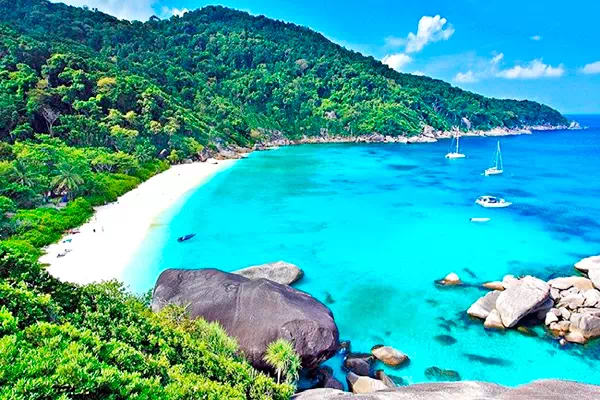
You are on the sand at Kata with a mask on your forehead, watching a dive boat head out past the headland and wondering what it would take to be on it. For most people, the answer is a single day. Looking into scuba diving Phuket for beginners usually starts with this exact thought, along with a little worry about ears, breathing and panic.
I have sent plenty of nervous friends on their first dive here. Most came back talking too fast and showing everyone the same blurry fish photo, and a few decided once was enough. Here is what the day really involves, so you can tell which one you are likely to be.
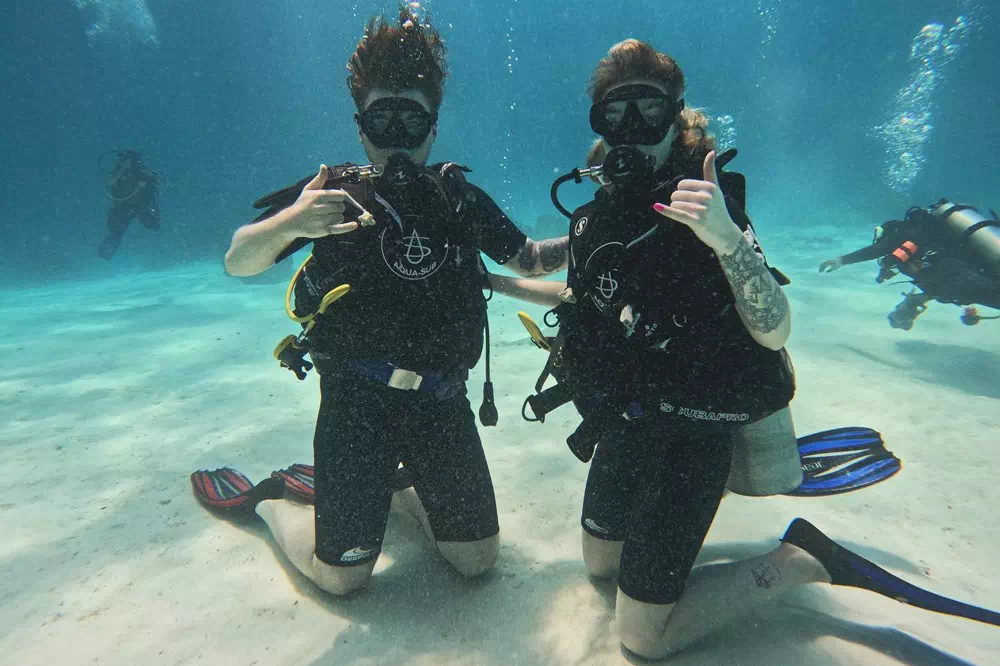
A try dive is a first scuba dive for people with no certificate: an instructor teaches you the basics, then stays right beside you underwater. You do not need any diving experience or a licence, and the equipment is included in the beginner program.
It is not a course. You will not leave as a qualified diver, and you cannot rent a tank and go alone the next day. Think of it as a guided taste, which lets you find out if you like being underwater before you spend days on a full certification.
You should be comfortable in the water, though you do not have to be a strong swimmer. If you panic when your face is wet, say so when you book. A good instructor can work with nerves, but only if they know about them before you are on the boat.
The people who enjoy it most are often not the sporty ones. It rewards calm and slow movement, and strength hardly matters. I have watched fit young men burn through their air in a nervous rush while their relaxed mothers floated along happily.
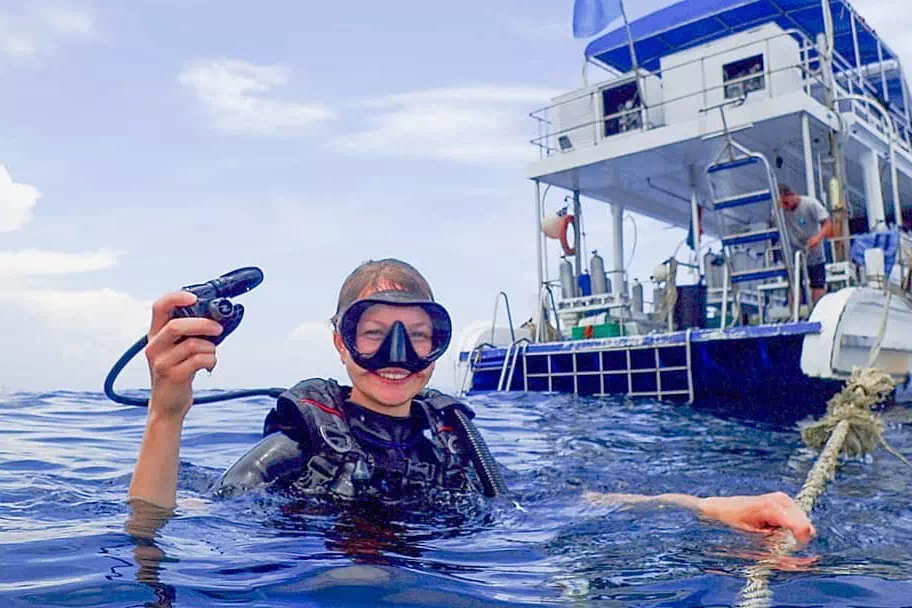
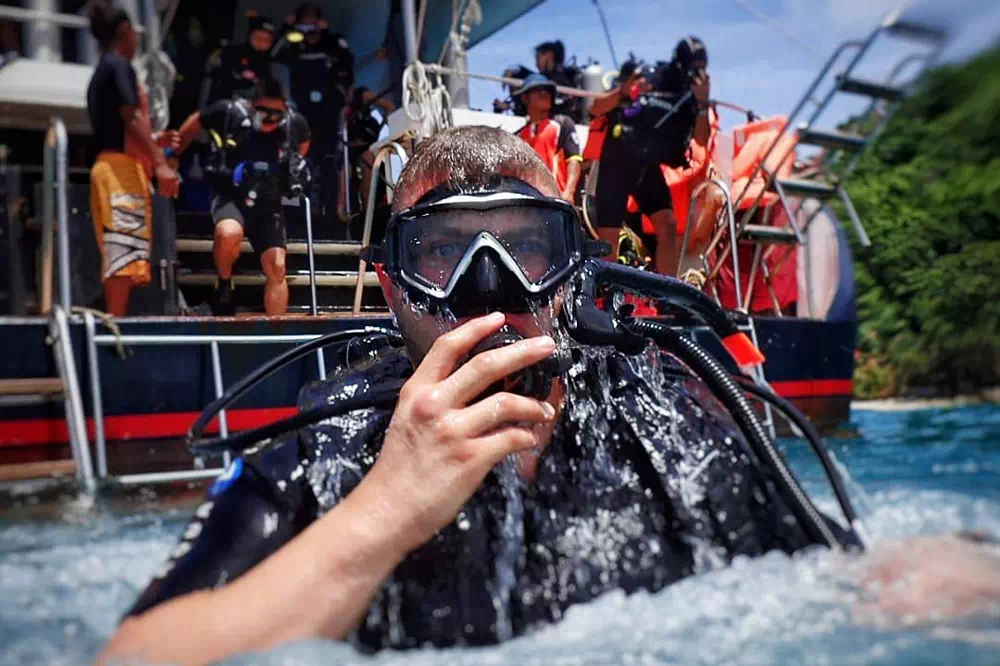
It is a full day of about 8 hours: hotel pickup in the early morning, around 1.5 hours by boat to the first site, then two or three dives with lunch and rest in between. You can also make your own way to the pier if that suits you better.
The briefing is the part to take seriously. You will learn how to clear water from your mask, how to equalise your ears, how to recover the regulator if it slips from your mouth, and the hand signals for "OK", "problem" and "up". Ask questions until you feel sure, as nobody is judging.
The one rule that really matters is never to hold your breath: keep breathing slowly and continuously for the whole dive. Your instructor will say it more than once, and that is exactly how it should be.
That first breath underwater feels strange. Your brain tells you this is wrong for about a minute, and then it stops arguing. Most beginners relax once they see the first fish and start looking at the reef instead of thinking about their lungs.
The beginner program costs ฿4890 for 2 dives or ฿5890 for 3 dives, in a group of up to 4 people. The ฿3990 you see on the tour page is the certified diver price, so absolute beginners should budget from ฿4890.
| Option | Who it is for | Price |
|---|---|---|
| 2 dives (group up to 4) | Complete beginners | ฿4890 |
| 3 dives (group up to 4) | Beginners who want the longer taste | ฿5890 |
| Extra dive, paid on site | Beginners who want one more on the day | ฿1000 |
| Non-diver companion with snorkeling | A partner or friend who stays on the surface | ฿2490 |
| 3 dives (group up to 4) | Certified divers | ฿3990 |
The price includes the roundtrip hotel transfer, full briefing, a professional instructor, accident insurance, breakfast, lunch, snacks, soft drinks and water, plus diving equipment for beginners. You bring sunglasses, sunscreen, a hat, a towel, swimwear and a copy or photo of your passport.
My advice: book 2 dives rather than 3 if you are nervous. The third dive can be bought on site if you feel great, and if you are tired you can snorkel instead. Paying more up front only makes sense if you are already sure you will love it.
Small groups are the point here. With up to 4 people, the instructor can actually watch you, and that is what you are paying for compared with a cheap dip in a bigger crowd. All details are on the Phuket diving tour page, including the PADI courses if you get hooked.
The tour suits anyone curious about scuba who wants transport, gear and an instructor arranged in one booking.
Expect reef fish, coral and rocky seabed, and treat anything bigger as luck. The day trips go to sites such as the Racha Yai and Racha Noi islands, the Phi Phi Islands, Shark Point and the King Cruiser wreck, and the choice depends on conditions and your level.

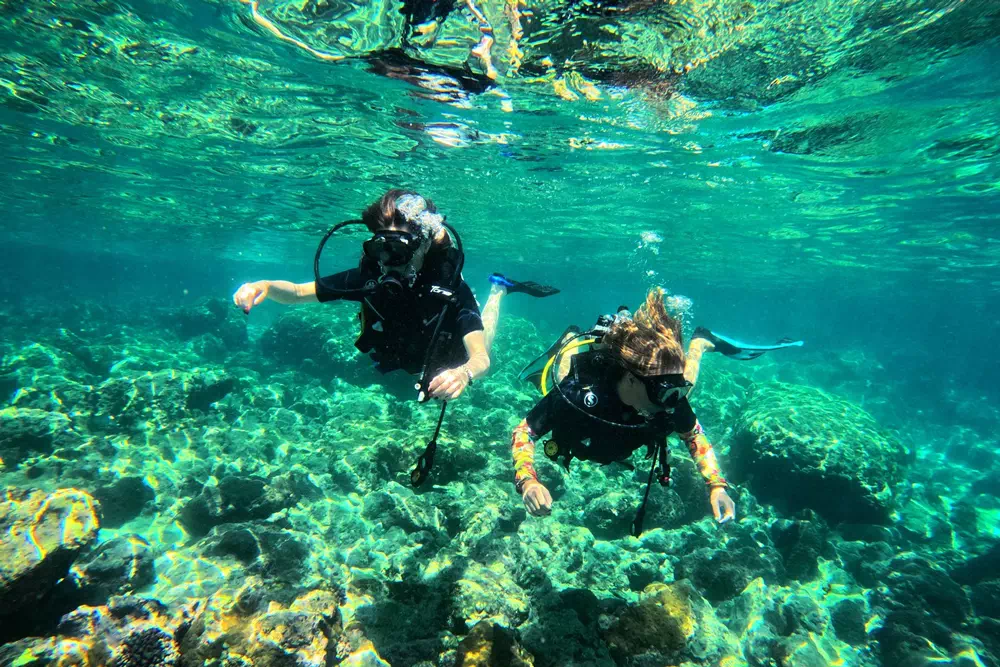
A beginner's reef is more interesting than you may expect. Clownfish, bannerfish, schools of small yellow fish, pufferfish and scorpionfish can all turn up in fairly shallow water, and colour shows best near the surface where there is the most light.
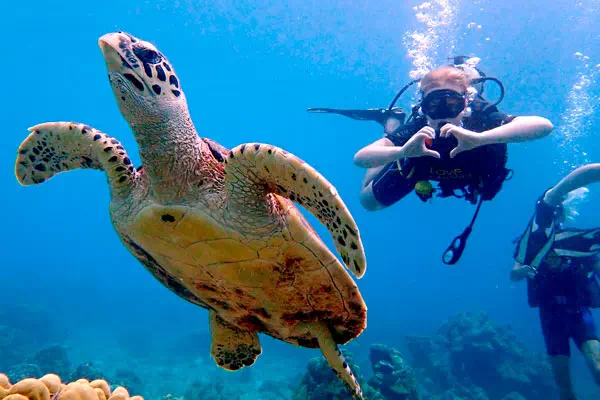
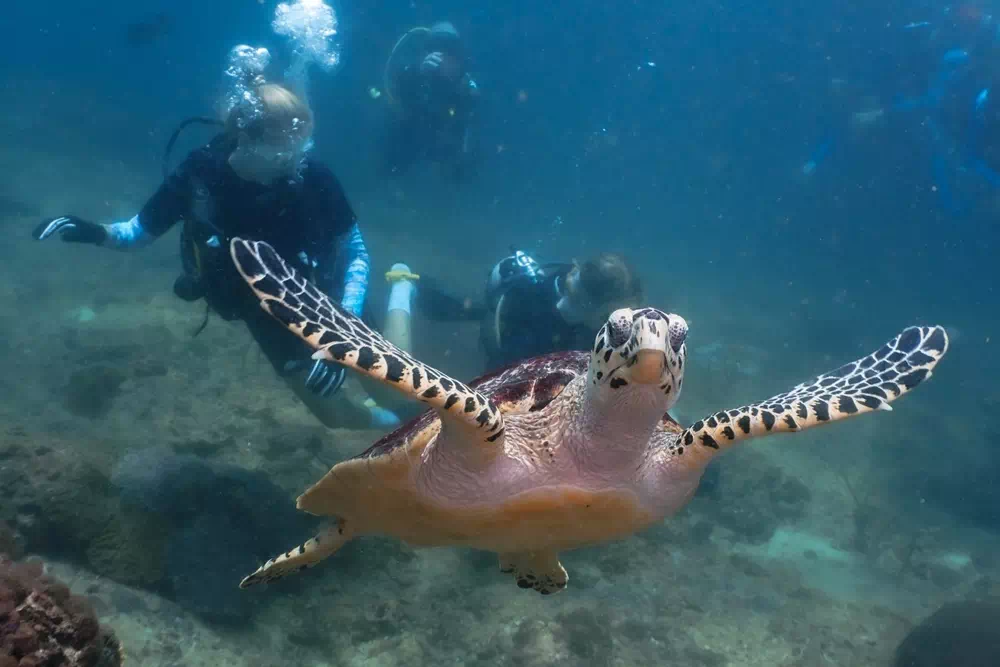
Sea turtles and leopard sharks do live around Phuket, but no one can promise them on your dive. Leopard sharks are harmless to divers and have the gentle habit of resting on the sand, which is why a first sighting tends to be a happy memory and not a scary one.
Be realistic about the wreck. The King Cruiser is well known, but I see it as a target for certified divers, and it would not be my pick for a first day. If you have your heart set on it, ask what is suitable for your level.
One honest warning: don't judge the whole sport by the first ten minutes. You spend that time thinking about your mask and your ears, so the fish come second. This is the best argument for two dives rather than one, because the second is where most people finally start to look around.
With a cold or blocked sinuses, no: wait until it clears, because you will not be able to equalise your ears. With asthma, heart or lung conditions, epilepsy, diabetes, pregnancy or recent surgery, you need a doctor's opinion before you book.
Expect a medical questionnaire before you dive, and please answer it honestly. A "yes" does not always mean no diving, but it may mean you need a doctor's signature first, and finding that out on the morning of the trip is frustrating for everyone. Check with your own doctor while you still have time.
Ears are the most common problem for beginners. You equalise by gently pinching your nose and blowing as you go down, early and often. If it hurts, signal your instructor, go up a little and try again. Never push through the pain: an irritated ear can spoil the rest of your beach holiday.
Seasickness can be a bigger issue than the diving itself, as the ride out takes about 1.5 hours and the sea can be choppy. If you are prone to it, take your usual tablets as advised by a pharmacist and tell your instructor. Sit outside and look at the horizon, not your phone.
Skip the big night in Patong before a dive. Dehydration and a hangover make everything harder, including staying calm. A light dinner, plenty of water and a normal bedtime are the cheapest upgrades you can give yourself.
Skip the try dive if you have a health issue with no doctor's clearance, if you fly the next day, or if you have a real fear of water and are only going to please somebody else. Snorkeling gets you most of the colour for far less money and effort.
For a simple day on the surface, the Racha, Coral and Maiton tour from ฿1090 is close, easy and good for mixed groups. For more serious snorkeling in season, read my honest Similan day trip guide first, because it is a long day out.
These two suit people who want the fish and the clear water without any tanks.
The widely used guidance from diving medicine bodies is at least 12 hours after a single dive and at least 18 hours after several dives or several days of diving. On a day with 2 or 3 dives, I would simply leave about 24 hours between your last dive and your flight.
The reason is nitrogen. Breathing compressed air at depth loads your body with extra nitrogen, which leaves gradually. Flying too soon means lower cabin pressure, and that raises the risk of decompression sickness even if the dive itself went perfectly.
In practice, do your diving in the first half of your stay. It also gives you a spare day if the weather cancels a trip or a blocked nose forces you to wait. Tell your instructor about your flight when you book and ask them to confirm it fits.
Flying before diving is no problem from a decompression point of view, but a long flight can leave you dehydrated and tired. Give yourself a full day to recover after you land, and enjoy the beach first.
November to April is the easiest time, with calmer seas and generally better visibility on the Andaman side. It suits beginners best, because a flat boat ride and clear water remove two of the main sources of stress.
From May to October, the southwest monsoon brings more wind and swell, and some days will be rough or cancelled. Diving does not stop completely in the rainy season, but the sites depend on conditions, so stay flexible and keep a spare day. My guide to the best time to visit Phuket breaks down the sea month by month.
Some people ask about the Similan Islands for a first dive. The national park is usually closed every year from mid-May to mid-October, and tours run only in season. For a beginner, it is a long way to go when Phuket's own sites can teach you just as much.
Water temperature is rarely a problem here. You will wear a wetsuit anyway, which helps protect you from scrapes and stings, and most people feel comfortable for the whole dive. If you tend to feel the cold, tell your instructor so they can find the right fit.
Send a booking request on the tour page or message on WhatsApp with your dates, hotel, number of divers and any health questions. Book early in your stay, so you still have a spare day and a clear gap before your flight.
You do not need to be a strong swimmer, but you should be comfortable in water. Tell the team when you book if you are a weak swimmer or feel nervous. That way your instructor can take it slowly and answer your questions in advance.
Any diving carries some risk, but a first dive with an instructor beside you, a full briefing and honest medical answers keeps that risk low. The main safety rules are simple: never hold your breath, go up slowly and signal any problem early. Most beginner trouble is nerves or sore ears.
Minimum ages depend on the program and the instructor, so ask before booking with your child's age. Children need to be comfortable in water and able to follow instructions calmly. If in doubt, start with snorkeling and try scuba on a later trip.
Yes. There is a non-diver companion option with snorkeling for ฿2490, so they share the boat, the meals and the day. It works well as long as they do not mind a long day on the water.
Glasses will not fit under a mask, so ask whether a suitable mask is available for your eyesight. Many divers use soft contact lenses without problems, though you should keep your eyes closed if your mask floods. Bring a spare pair just in case.
Photos are not listed as part of the beginner program, so do not count on them. Ask when you book what is possible on your date. On a first dive, I would rather you watched the reef than worried about a camera.
Yes, many people enjoy the first dive and then go on to a course. PADI Open Water and Advanced courses are offered on the same tour page, so you can check the details there. It takes more time than a one-day try dive, so plan for that early in your trip.
The dive site can change, and on bad days a trip may not run for safety reasons. This is why it helps to book early in your stay and keep a spare day. Ask how changes are handled when you send your request.
Hotel pickup, insurance and a licensed local operator. Ask us anything on WhatsApp before you book.
Updated 17 November 2026.