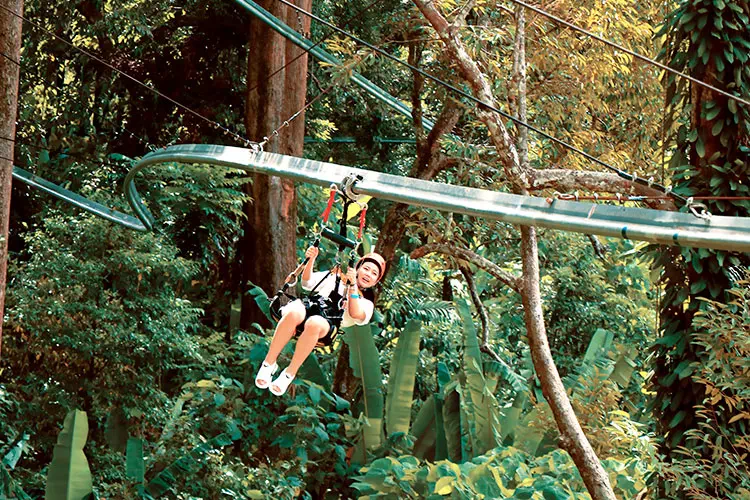
You Might Also Like
WhatsApp, Telegram +66-957-269-990
- info@gophukettours.com


An honest guide to meeting elephants responsibly from Phuket: why riding and shows are best avoided, what a good no-riding visit looks like, a checklist for judging any camp, and how the Khao Lak elephant bathing day actually runs.
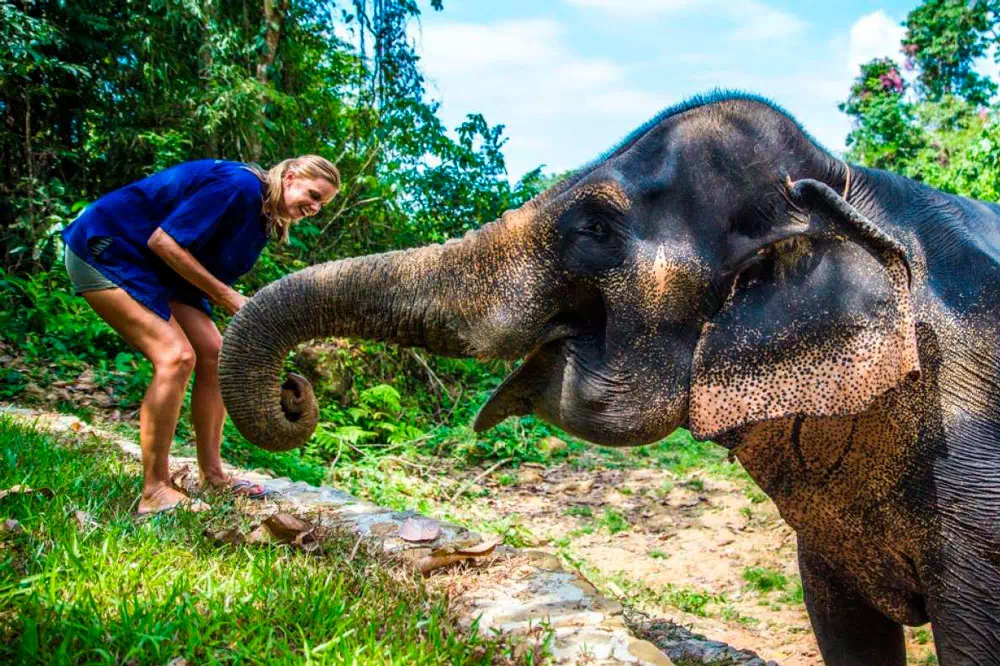
The flyer at your hotel shows a smiling tourist on top of an elephant, and the one next to it says "ethical sanctuary" in big green letters. You want to see elephants up close, but you do not want to pay for something that hurts them. That is exactly the right question to be asking.
Searching for an ethical elephant sanctuary Phuket travellers can trust is harder than it should be, because almost every camp now uses the same words. This guide explains what to avoid, what a good visit looks like, how to check any camp yourself, and what really happens on the Khao Lak elephant bathing day from Phuket.
There are several camps on Phuket and in Phang Nga that call themselves sanctuaries, but the word "sanctuary" has no fixed meaning in Thailand, so it tells you very little on its own. Some places are genuinely gentle with their animals, others simply removed the riding seats and kept everything else the same.
The honest approach is to look at what the elephants are asked to do, not at the sign at the entrance. A good camp lets elephants eat, walk, bathe and rest, with visitors watching and helping in small ways. A poor one turns them into a photo machine for the whole day.
Most elephants in tourism in Thailand were once logging animals or were born into captivity. They cannot simply be released into the forest, so they need care, food and space for life, and tourism pays for much of that. That is why choosing well matters: your money tells camps which kind of experience to offer.
The Khao Lak trip we sell takes you to an elephant farm on the mainland, in Phang Nga Province, as part of a full day out. We describe it below exactly as it runs, so you can decide for yourself whether it matches what you are looking for.
Because both usually depend on harsh training and put strain on the animal. An elephant's back is not built to carry a heavy seat and people for hours, and tricks like painting or standing on two legs are not natural behaviour.
Traditional training of young elephants for riding and performing has often involved breaking their will so they obey commands. Not every mahout is cruel, and many care deeply for their animals, but the system that produces riding and show elephants has a hard history.
Riding seats press on the spine and can cause sores over time. Shows with football, painting or dancing need repeated training sessions for behaviours that elephants would never do on their own. Body paint and decorations are also a warning sign: they are for the camera, not for the elephant.
None of this means you have to stay away from elephants completely. It means choosing a visit where the elephant's normal day (eating, walking, wallowing, bathing) is the experience. If the activity would still make sense with no tourists there, you are usually in a good place.
A good visit is built around three things: feeding, walking alongside, and mud or water bathing, always under the guidance of the elephant's mahout. The mahout, the keeper who works with one elephant every day, should be close by and in charge the whole time.
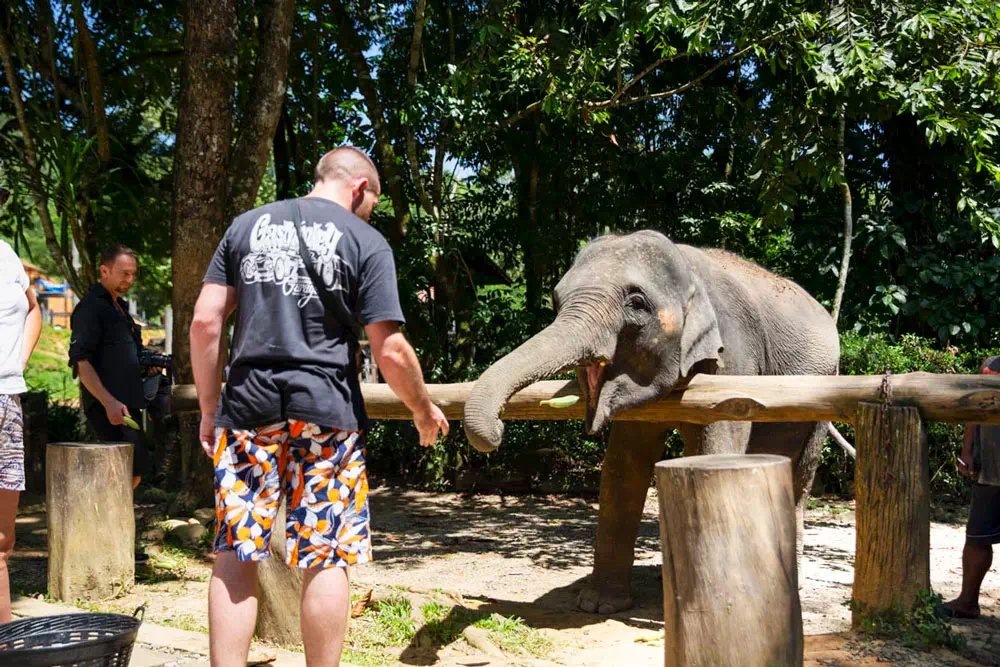
Feeding is usually the first moment of contact. Elephants eat a huge amount every day, so bananas, sugar cane or grass go fast, and you quickly learn how strong and precise a trunk is. It is also the safest way for nervous visitors, and children, to get close.
Walking alongside means following the elephants at their pace to a feeding area or a water spot, with nobody on their backs. Not every camp has the space for this, so it varies from place to place.
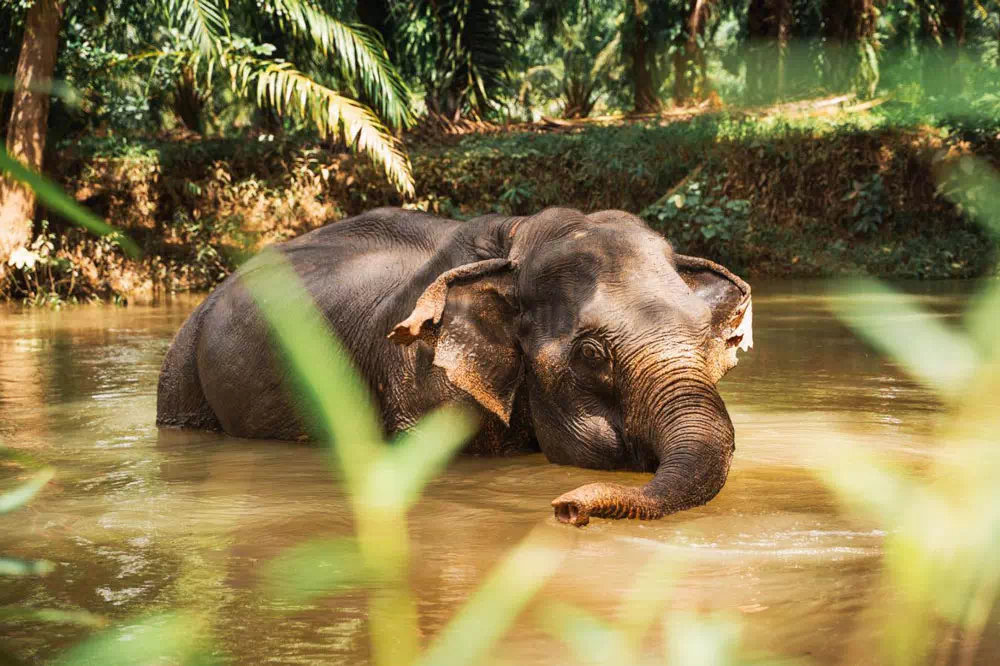
Bathing is the part everyone remembers. Elephants love water and mud: it cools them down and protects their skin from sun and insects. In a good bath, the elephant goes in because it wants to, you splash and scrub gently, and the mahout decides when it is time to stop.
Group size matters too. A calm visit with a manageable group feels very different from a crowded one where each elephant is surrounded by phones. If you can, go when the group is small and give the animals space when they move.
You can judge most camps in the first ten minutes if you know what to look for. The single best test: are the elephants free to move, eat and rest, or are they chained and waiting for the next group?
| Good signs | Warning signs |
|---|---|
| No riding, no seats on elephants | Riding offered, even "bareback" or "only for a short time" |
| No shows, no painting, no tricks | Shows with dancing, football or painting |
| Mahouts close by, calm voice and gentle handling | Bullhooks used to hit, shouting, rough pulling |
| Shade, water and plenty of food around | Elephants standing chained in the sun between groups |
| Elephants can walk away from visitors | Elephants made to pose for photo after photo |
| Clear safety briefing before contact | No briefing, guests crowding around the animal |
Before you book any camp, ask a few simple questions:
On the day, trust your eyes. If an elephant looks stressed (swaying from side to side, shaking its head over and over, or pulling away), step back and give it space. If something feels wrong, it is fine to watch rather than take part, and please tell us afterwards so we can follow up.
It is a 10-hour day trip by minivan with a guide, from ฿1390, that mixes culture, elephants and jungle. The elephant part is feeding and bathing with adult and baby elephants at an elephant farm, and riding is not part of the program on the tour page.
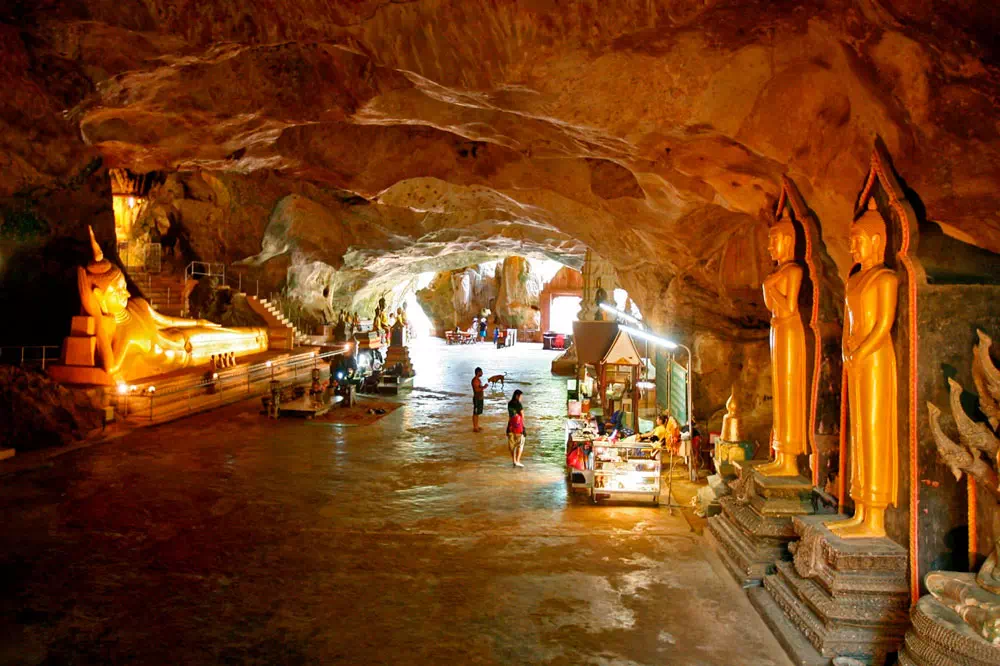
The first stop is Wat Tham Suwan Khuha in Phang Nga Province, a cave temple with a golden Reclining Buddha deep inside. Macaques live around the cave. They are used to people and often come close, so keep food and sunglasses out of reach and do not feed them from your hand.
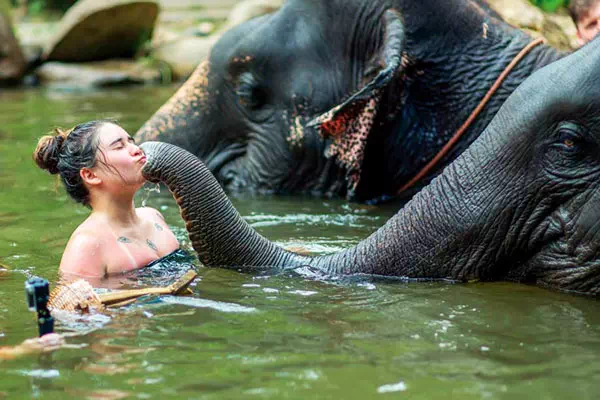
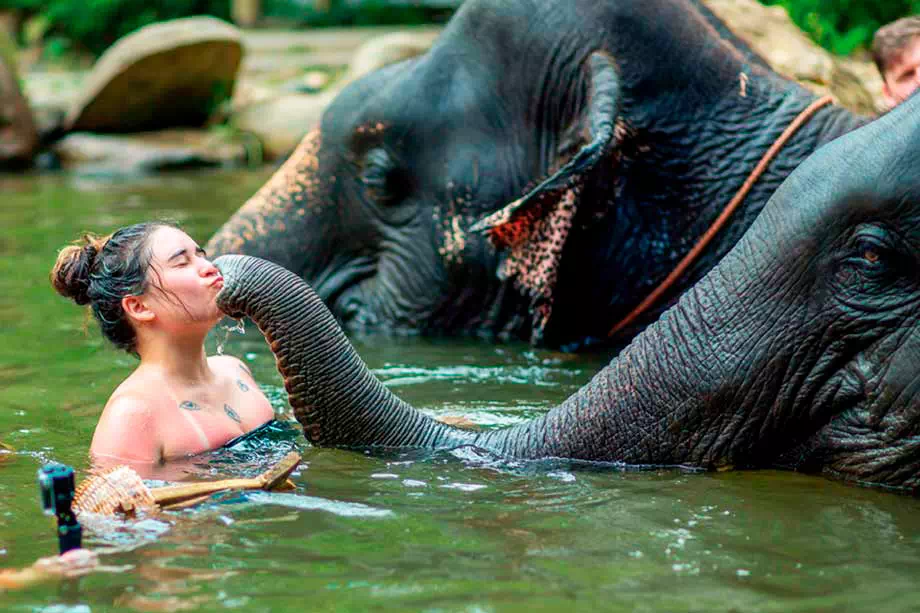
Next, jeeps take the group to the elephant farm. Here you feed the elephants (treats can be bought on site, or you can bring bananas) and spend time with adult elephants and baby elephants. Then comes the bath: you get into a pool with them, splash and scrub, and it is a lot of laughing and getting wet.
One honest note: the program mentions a gentle "elephant kiss" as a keepsake. It is a cute photo, but it is a trained behaviour. You do not have to ask for it, and we think the feeding and bathing are the better part of the visit anyway.
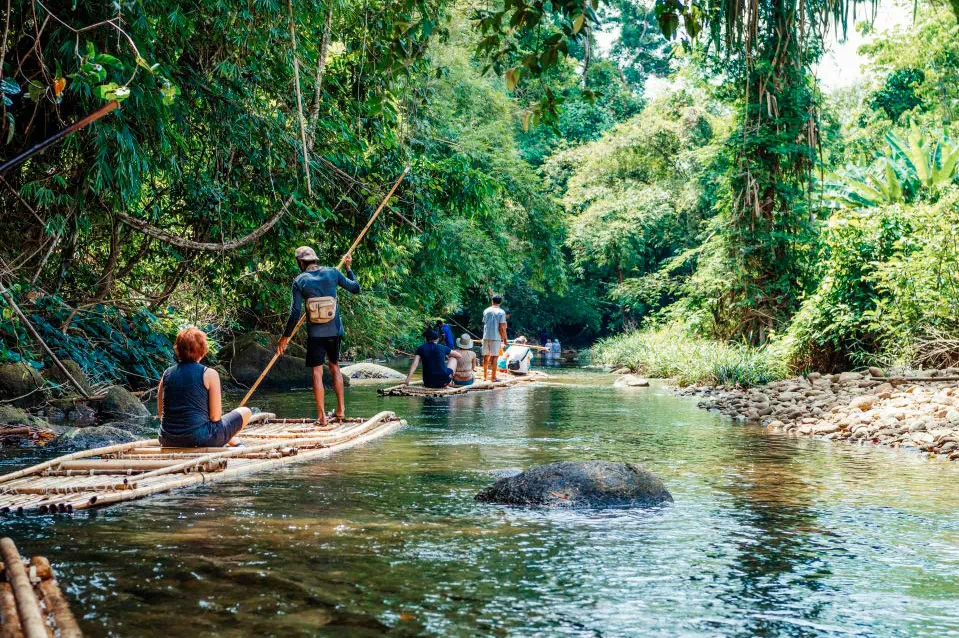
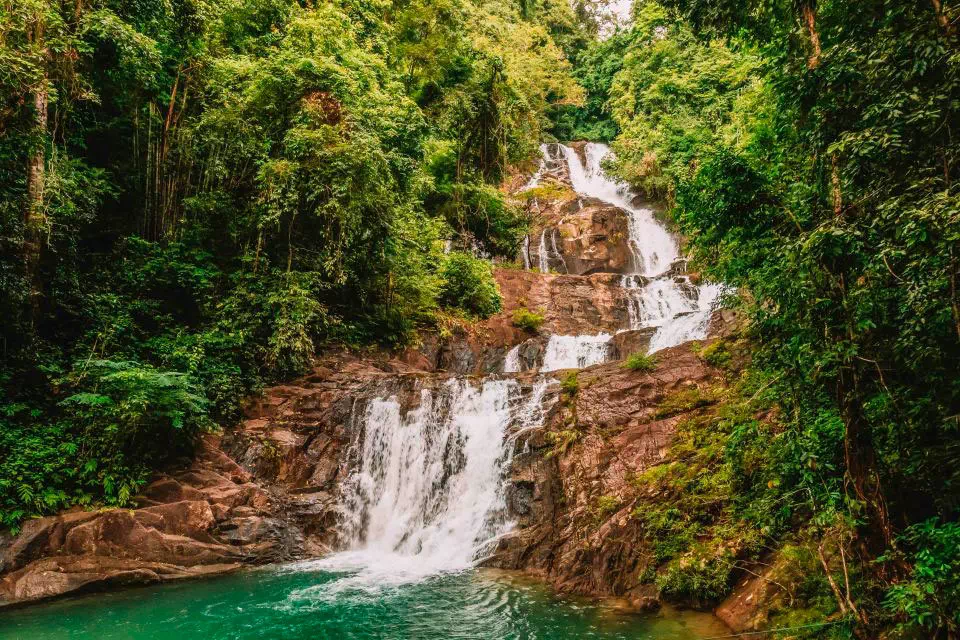
After the elephants there is a Thai lunch, mild enough for children. The afternoon is in the Khao Lak Nature Reserve, with a slow bamboo raft ride down a jungle river with a guide, and time to swim in the cool water of a waterfall before the minivan takes you back to your hotel.
How does this compare with the checklist above? There is no riding and no show in the program, the contact is feeding and bathing, and the mahouts handle the elephants. The bath is in a pool rather than a wild river, and the visit is part of a busy day rather than a long, slow morning with the herd. For most families that balance works well, while travellers who want a purely observational visit may prefer to look elsewhere.
The rhythm of the day is worth knowing in advance. The morning is cultural and calm, the middle of the day is wet and noisy with the elephants, and the afternoon on the river is slow and green. Pack for all three, and do not wear your best shoes: expect wet, muddy ground around the elephants and a wet step on and off the raft.
All details, inclusions and booking are on the Khao Lak and elephant bathing tour page.
Calmly, slowly and always on the mahout's instructions. An elephant is gentle but enormous, so most accidents happen when visitors stand in the wrong place or move suddenly.
Approach from the side where the elephant can see you, never from directly behind. Do not stand between a mother and her baby, and keep children holding an adult's hand until the mahout says it is fine to step closer.
Use the camera less than you think. The best moments happen when you put the phone away and just feed, splash and watch. Ask one person in your group to take photos for a few minutes, then swap.
Avoid flash, loud voices and running near the animals. If you feel unsure, stay at the edge of the pool and watch: the mahouts are used to nervous visitors, and nobody will push you to get in.
It suits families, couples and first-time visitors who want a full day on the mainland with elephants as the highlight. The long day is the main downside: it is 10 hours door to door, with a fair amount of time in the minivan.
Kids love it, and the mix of temple, monkeys, elephants and a raft keeps them busy all day. Older travellers enjoy it too, as there is no hard hiking, though you do climb in and out of jeeps and onto a bamboo raft.
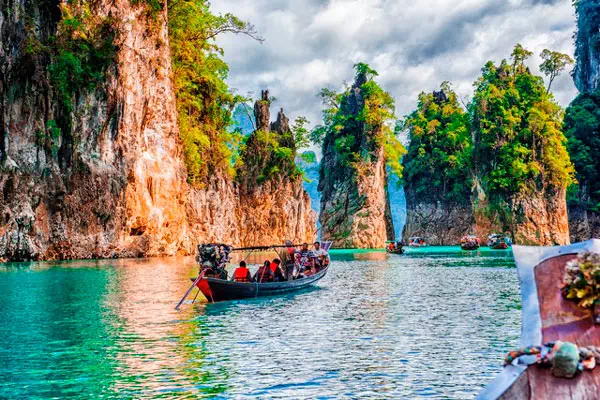
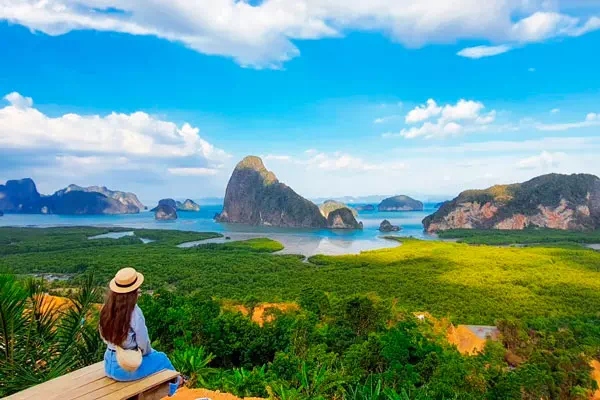
If what you want is a long, quiet observation-only visit with no contact at all, this is not that kind of trip, because touching, feeding and bathing are part of the day. And if you would rather spend the day in nature without animals, the lake day at Khao Sok and Cheow Lan Lake or the viewpoints of the Phang Nga Bay and Samet Nangshe tour are great alternatives.
The elephant day suits families and animal lovers, Khao Sok suits people who want lakes and jungle scenery, and the Phang Nga Bay trip suits photographers and viewpoint lovers.
Plan it as a full day with nothing else after it. You will come back wet, a bit tired and happy, and the best evening plan is dinner close to your hotel.
Check the full list on the tour page before you go. To book, send a request through the tour page or message us on WhatsApp, and if you are still planning your week, our list of the top 5 Phuket tours helps you balance a long mainland day with easier beach days.
Riding is not part of the program described on the tour page. The elephant part of the day is feeding and bathing with adult and baby elephants. If you see riding offered anywhere on the day, you are free to say no.
Yes, children join this tour and enjoy it, as long as an adult stays with them and everyone follows the mahout's instructions. Keep small children holding your hand near the elephants and let them feed the animals first to build confidence.
Wear swimwear under light clothes that you do not mind getting wet and dirty. Bring a full change of clothes and a towel. For the cave temple, a cover-up for shoulders and knees is respectful.
Yes, you can bring bananas, which elephants love, or buy treats on site. Do not bring sweets, bread or processed snacks, and ask the mahout before giving anything new.
Yes, the elephant bath is in a pool and you can stay in shallow water or watch from the edge. On the bamboo raft and at the waterfall, tell the guide if you cannot swim so they can help you choose where to sit and swim.
The whole tour lasts about 10 hours including transfers by minivan. Expect a fair amount of road time, so bring water and something to do for kids.
Yes, lunch is included in the day, with Thai dishes that are suitable for children too. Check the full list of inclusions on the tour page before you book.
Hotel pickup, insurance and a licensed local operator. Ask us anything on WhatsApp before you book.
Updated 28 October 2026.