

You Might Also Like
WhatsApp, Telegram +66-957-269-990
- info@gophukettours.com


Maya Bay reopened with new rules, and most visitors arrive not knowing them. Here is what a visit looks like today, why the rules exist and how to time your day so the beach is not shoulder to shoulder.
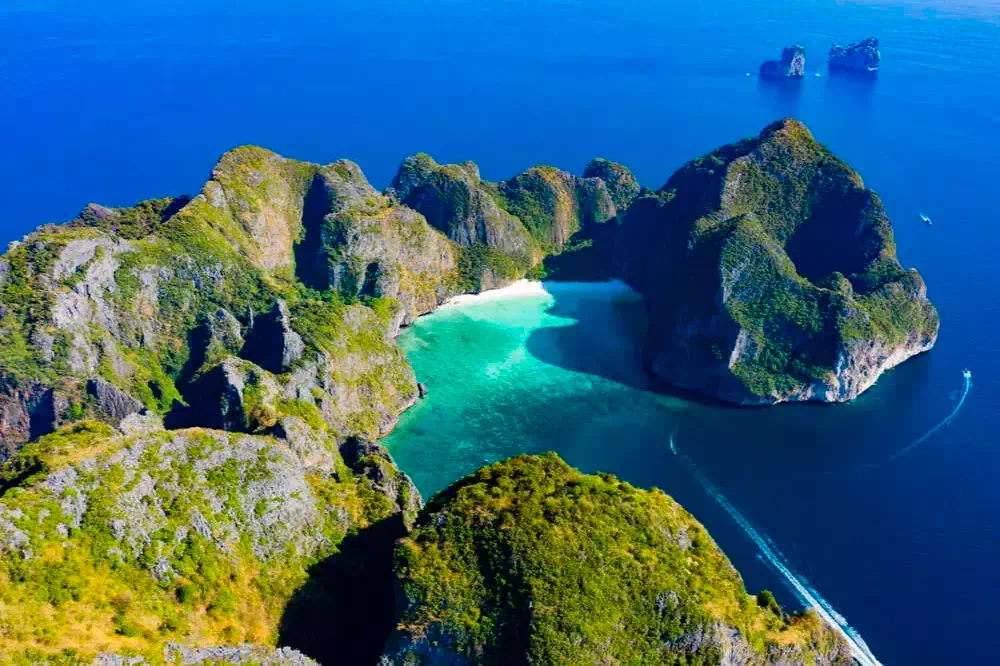
The speedboat slows, the engine drops to a mutter, and everyone on board stands up to see the cliffs of Phi Phi Leh close in. Then the first question of the day comes from the back row: can you swim in Maya Bay? The short answer is no, and it helps to know why before you get there.
I have watched this little bay change completely over the years. It went from a beach packed with boats to a closed, recovering reserve, and then to the carefully managed spot it is now. This guide covers what you can and cannot do, how the visit works step by step, and how to time it so the day feels worth it.
No. Since Maya Bay reopened in 2022, swimming in the bay is not allowed, and park rangers on the beach enforce it with whistles. You can walk on the sand, stand at the edge of the water and take as many photos as you like, but you cannot swim out the way people did in the old days.
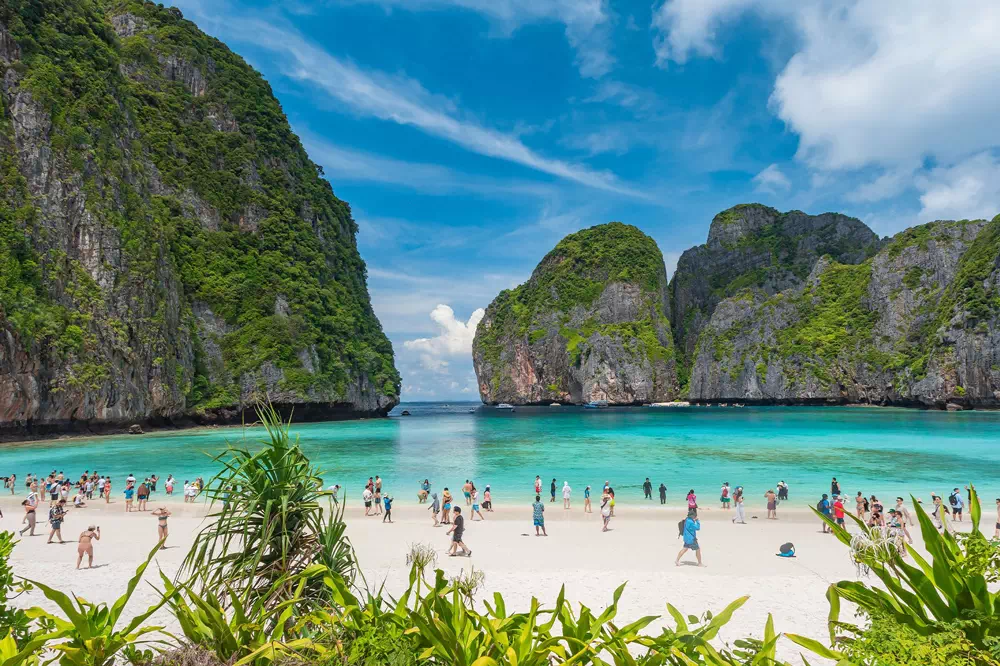
How strict it feels depends on the day and the rangers. On some visits people are allowed to wade at the very edge, on others the whistle goes as soon as anyone steps in past the ankles. Treat the shallows as a place to cool your feet, not a swimming spot, and you will not be disappointed.
This surprises a lot of people, because the bay still looks like a swimming pool from the boardwalk. The water is clear, calm and inviting. That is exactly why the rule exists: the shallow sandy bottom is a nursery for young sharks and other marine life that were pushed out when thousands of people swam here every day.
If swimming is the main thing you want from a Phi Phi day, do not worry. A normal day trip includes other stops where you can swim and snorkel properly, and I cover those further down. Maya Bay is the photo stop and the story stop, not the swim stop.
Maya Bay was closed in 2018 because the coral and the beach were being worn down by boats and crowds. It became world famous after the film The Beach with Leonardo DiCaprio, and for years the number of visitors kept climbing. Boats anchored right over the reef, and anchors, engines and feet did serious damage.

The national park kept the bay closed far longer than anyone expected. During those years the reef had time to rest, coral was replanted and the sharks returned to the shallows. When it reopened, the park brought in a new way of visiting rather than going back to the old free-for-all.
The main changes are simple to remember:
Honestly, I think it is a better experience now. Fewer boats means you can see the cliffs and the sand without a wall of engines in the foreground. You give up the swim, but you get a cleaner, quieter version of the view that made the place famous.
A visit today is a short, guided walk: the boat ties up on the far side of Phi Phi Leh, you walk the boardwalk to the beach, spend your slot on the sand, and walk back. The time on the beach is limited, so the visit feels more like a well organised stop than a lazy beach session.

Here is how it usually goes on a day trip from Phuket. The guide explains the rules on the boat before you arrive, which is a good moment to ask questions. Then you step off at the pier, which can be a little wobbly if there is swell, so keep a hand free and your phone in a zipped pocket.
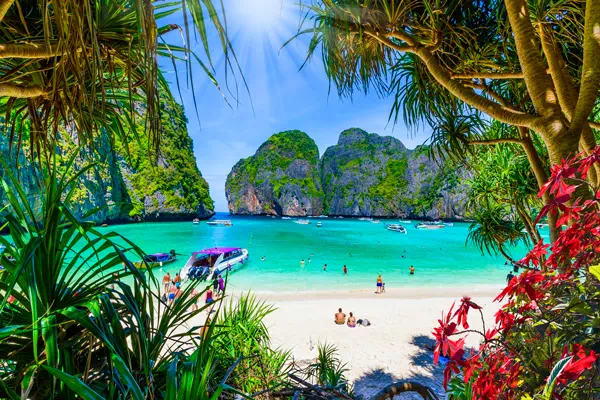
The boardwalk runs through shade and forest, and it is a pleasant walk rather than a hike. Wear sandals or light shoes with some grip, because wooden boards get slippery when wet. When you come out of the trees onto the beach, the view opens up in one go, and it really is as good as the photos.
On the sand, rangers keep an eye on where people go. There are marked areas, and you are expected to stay within them. You can take photos, sit for a while and look for sharks in the shallows. Then the guide gathers the group and you walk back to the boat.
| Rule | What it means for you | Why it exists |
|---|---|---|
| No swimming | Stay on the sand or at the very edge of the water | Protects young sharks and recovering coral in the shallows |
| Boats stay out of the bay | You arrive at a pier on the back side and walk in | Stops anchor and engine damage to the reef |
| Fixed time on the beach | Your visit is short and runs on a schedule | Keeps numbers on the sand under control |
| Marked areas | Follow ropes, signs and ranger whistles | Lets parts of the beach and forest recover |
| No litter, no feeding fish | Take everything back to the boat | Keeps the bay clean and the wildlife wild |
| Yearly closure | No visits during the recovery period | Gives the whole ecosystem a regular rest |
One honest downside: if the sea is rough, the pier on the back side can be hard to use, and the boat may skip Maya Bay or change the order of stops. That is a safety call made on the day, and the guide will explain it. It does not happen often in the dry season, but it does happen.
Yes. Blacktip reef sharks are now a regular sight in the shallow water of Maya Bay, and they are one of the main reasons the bay stays closed to swimmers. They are small, shy reef sharks, not the kind of shark that should worry you, and seeing them cruise through ankle-deep water is one of the best parts of the visit.

During the closure years, the sharks moved back into the bay in good numbers because there was no one in the water. The shallows give young sharks shelter from larger predators, so the bay works like a nursery. If hundreds of swimmers jumped in every hour, they would simply leave again.
Your best chance of seeing them is to stand quietly near the waterline and watch for a dark fin tip. Bright sunlight and calm water help a lot. Shouting, splashing and crowding the edge do not, so if you see one, tell the people next to you quietly and enjoy it.
If you want to see sharks and reef life underwater, Maya Bay is not the place for it. A proper snorkeling stop on the same day, or a separate trip like the scuba diving tours from Phuket, will give you that in water where it is allowed.
The national park closes Maya Bay for a recovery period every year, and in recent years that closure has fallen in the rainy season, usually around August and September. The exact dates are announced by the park and can change, so always check before you build your plans around it.
The idea is the same as the long closure, just shorter. The reef gets a break, the beach gets cleaned and repaired, and the wildlife has a season without people. It also lines up with the months when the sea on the Andaman side is at its roughest, so many boats would struggle to land there anyway.
The good news is that Phi Phi tours do not stop when Maya Bay closes. The rest of the route, with Pileh Lagoon, Viking Cave, Monkey Beach, snorkeling and lunch on Phi Phi Don, still runs when the weather allows. You simply see Maya Bay from the boat, or not at all, depending on the rules that year.
Apart from the planned closure, there can be short, unplanned closures for bad weather or special reasons. These are rare in the dry season, from roughly November to April, when the sea is at its calmest. If seeing Maya Bay is the whole point of your trip, the dry season is the safer bet.
A practical tip: if you are booking a Phi Phi day during or close to the closure window, ask the team on WhatsApp before you pay. They see the park notices and can tell you whether Maya Bay is on the route for your date, so there are no surprises on the boat.
Early morning is the best time to visit Maya Bay, because the first boats of the day reach the beach before the midday rush. The light is softer, the sand is less crowded and the sharks are easier to spot in the calm morning water.

Tours handle timing in a simple way: they put Maya Bay first. On the Phi Phi Islands Tour from Phuket, the speedboat goes straight to Maya Bay as the first stop after the morning transfer and the coffee at the pier. That means you arrive while many of the bigger, slower boats are still on the way.
From there the day follows the classic loop. You go on to Pileh Lagoon, Viking Cave and Monkey Beach, then snorkel at a coral reef, have a buffet lunch on Phi Phi Don and finish at Khai, Bamboo or Maiton island on the way back, depending on the program. The whole tour takes 9 hours with hotel transfer, drinks, lunch and a guide included.
If you go independently, for example by ferry to Phi Phi Don and then a longtail, you can try for an early slot too. But you spend more time arranging boats, and you depend on local captains and the sea. For most people a day trip is simply the easier way to get the timing right.
The speedboat day suits most first-timers who want Maya Bay plus a real swim. If you would rather have limestone scenery with kayaking and a slower pace, the James Bond Island tour is the alternative. The Racha and Maiton islands day is better for people who mainly want beach time and easy snorkeling.
Not sure which island day fits you? I compared the two most popular options in Phi Phi or James Bond Island: which tour is better, and it is worth a read before you book.
You can swim and snorkel at several stops on the same day: Pileh Lagoon is the best swim of the trip, followed by the coral reef snorkel stop and the beach at the end of the day. So the no-swim rule at Maya Bay costs you surprisingly little.

Pileh Lagoon sits a short ride from Maya Bay, surrounded by tall limestone walls, and the water there is deep and clear, reaching around 20 meters. Boats stop in the lagoon and you jump straight off the side. It is the swim most people remember, more than the famous beach.
The coral reef stop is where the snorkeling happens. The mask, snorkel and life jacket come with the tour, so you do not need your own gear unless you prefer it. Fish come close, especially in the morning, and the water is calm enough for beginners when the weather is good.
Later in the day you get free time on the beach after lunch on Phi Phi Don, and a final stop at Khai, Bamboo or Maiton island. These are easy, shallow beaches for a lazy swim. For a fuller picture of the whole route, see what to expect on a Phi Phi island tour from Phuket.
A little preparation makes the Maya Bay stop much smoother. The rules are easy to follow once you know them, and the right kit means you enjoy the walk and the swims later in the day.
My last piece of advice: do not judge the day by Maya Bay alone. It is the famous name, but the lagoon swims, the cliffs and the beach at the end are what make the trip. Go with the right expectations and you will come back happy. If you want to compare it with other days out, the full list of tours from Phuket is a good place to start.
Yes. Walking on the sand, taking photos and standing at the water's edge are all allowed. Rangers mark the areas you can use, so follow the ropes and signs. Swimming in the bay is the part that is not allowed.
For most people, yes. The view of the cliffs and the white sand is still one of the best in Thailand, and seeing reef sharks in the shallows is a real bonus. The swimming happens at other stops on the same day, so you do not miss out.
Visits run in timed rounds, so your slot on the beach is short and fixed. It is enough for the walk, photos and a look for sharks. If you want long hours on the sand, the beach stop at the end of the day is better for that.
Often yes, depending on the rules that year and the sea conditions. Boats sometimes pass the entrance so guests can see the bay from the water. Ask before booking if this matters to you.
The sharks in the bay are small, shy blacktip reef sharks that avoid people. The rule against swimming is about protecting them, not protecting you. Stay calm, keep your distance and let them pass.
Maya Bay is inside a national park, and park entry is charged for each visitor. Check the tour page for what your tour includes, and bring some cash in case anything is paid locally. Fees are set by the park and can change.
Yes, the boardwalk is easy and the beach visit is short, which works well for kids. Hold small children's hands on the pier and the wet boards. Bring a hat and water, because the sand gets hot by late morning.
Hotel pickup, insurance and a licensed local operator. Ask us anything on WhatsApp before you book.
Updated 30 October 2026.