

You Might Also Like
WhatsApp, Telegram +66-957-269-990
- info@gophukettours.com


What the southwest monsoon really means for your holiday: the showers, the rough west-coast sea, the savings, and which tours still make a good day out.

The sky over Kata goes dark in about ten minutes, the sunbeds empty, and everyone runs for the nearest noodle shop. Forty minutes later the sun is back, the road is steaming, and the waves look bigger than they did at breakfast. That is the Phuket rainy season on a typical day, and it is neither the disaster that some people fear nor the secret bargain that others promise.
I would happily come in these months, with the right plan and the right expectations. Here is what you are really signing up for, and who should book a different time of year.
It is warm, humid and changeable, with heavy showers that often pass quickly. The southwest monsoon runs roughly from May to October, and the most common pattern is a mix of sun and short downpours, not a solid week of rain.
That is the good version, and you will get a lot of days like it. Showers often come in the afternoon or overnight, and mornings can be bright and fresh. The island turns a deep green, waterfalls wake up, and the air can feel cleaner than in the hazy, hot weeks before the rains begin.
Now the less good version. Sometimes a weather system parks itself over the Andaman Sea and you get two or three grey, wet days in a row. September is usually the wettest month, and October can also be heavy. Roads flood briefly in low spots, and travel across the island takes longer.
The other thing you notice is the humidity. Clothes never quite dry, towels smell, and walking around at midday feels like hard work even when the sky is cloudy. Pack light, quick-drying clothes and accept that you will be damp some of the time.
For a closer look at how each month compares, this month by month guide to Phuket's weather and sea will help you choose your dates. The short version: May and June are often a gentler bet than September.
Often it is not, at least on the west coast. A red flag means do not swim, and it is not a suggestion: rip currents at beaches such as Patong, Karon, Kata, Kamala and Surin drown people every monsoon season.
The wind pushes straight onto the western side of the island during these months, which is where most of the popular beaches are. The waves can look like fun, and the water can look shallow and harmless near the sand. The danger is the current that drags you out, and strong swimmers get caught as well.
Here is the simple code to follow:
This changes what a beach holiday looks like. Many days you will sit on the sand, walk along the shore and watch the surf rather than swim in it. Hotel pools suddenly matter a lot, so choose a place with a good one. More sheltered bays can be calmer, but ask locally on the day, because conditions change quickly and no beach is safe by default.
Yes, usually. Phang Nga Bay lies on the sheltered eastern side of Phuket, so it is the most reliable sea trip of the monsoon months.

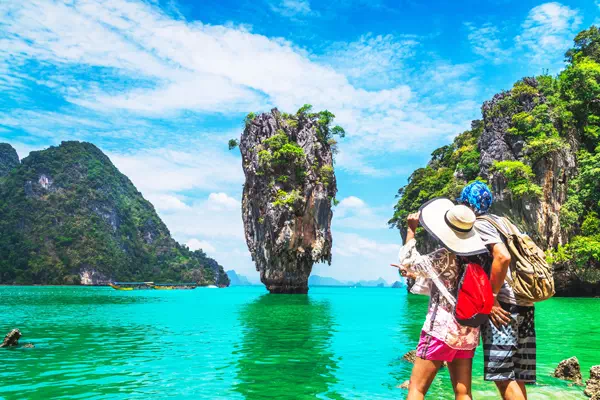
The James Bond Island tour from Phuket costs from ฿1690 on the tourist ship and lasts about 8 hours, with a hotel transfer between 07:00 and 08:30. The day includes Panak Island with its Bat Cave, canoeing around the rock grottoes of Hong Island, and the famous pillar of Koh Tapu, which you look at from nearby Khao Phing Kan since walking on it is not allowed.
Choose your boat with care. Lunch on the ship option is served on board, and the Panyee village visit is not included, so read the tour page closely before you book. In wet weather, though, a larger boat with a roof and a dry deck has real advantages, especially for anyone who worries about the sea.
Rain changes the look of the place more than it spoils it. Low cloud around the limestone is moody and beautiful, and it can feel quite cinematic, although photos in a downpour will not match the turquoise you saw online. The water can look greener and murkier than it does in the dry season, so go for the scenery rather than the swimming.
If this is your one boat day, I would book it early in your stay. That way, if a storm does force a change, you still have time for another date. It is my first recommendation for sea-lovers in these months.
Yes, if you can handle a long day. Khao Sok and Cheow Lan Lake are at their greenest in the wet months, but the tour lasts 13 hours and the drive to the lake can take more than 3 hours.

The Khao Sok and Cheow Lan Lake tour starts from ฿2290, with hotel pickup between 06:20 and 07:20. It includes the national park entrance fee, a lunch at a floating village and a longtail boat trip among the limestone towers. Along the way, you stop at the Samet Nangshe viewpoint and the Ratchaprapa Dam viewpoint.
A lake does not care about waves in the way that the open sea does, so this trip suffers less from the monsoon than an island day. You can still swim, and you can take a kayak out if you wish. If you love forests and misty scenery, this is where the rainy season works in your favour rather than against you.
Be honest with yourself about the downsides. A longtail boat is open, so you may get wet, and the viewpoints depend on the cloud. On a grey day Samet Nangshe may show you a lot of white and not much bay. The drive is long, and the tour page itself suggests motion sickness tablets if long bus rides bother you.
These two trips are my picks for most people in the wet months: the James Bond tour for a sheltered sea day, and Khao Sok for anyone who wants lake scenery and does not mind the long drive.
ATV rides, ziplining, rafting and water parks all carry on in most weather, though lightning can pause them. Mud makes an ATV ride better rather than worse, and guests get a raincoat on rainy days.

The ATV quad bike tour starts from ฿1890 for an adult rider, with departures at 09:00, 12:00 and 15:00. That choice of times is handy in the wet season, because you can often pick a morning slot before any afternoon storm. The trails run through jungle, rubber plantations and mangroves.
Here is how the other land options compare in the rainy months, along with the sea trips, so you can see everything in one place:
| Tour | From | Rainy season outlook |
|---|---|---|
| James Bond Island | ฿1690 | Good: sheltered bay, the safest bet for a boat day |
| Phang Nga Bay and Samet Nangshe | ฿1890 | Good, but the viewpoint depends on the cloud |
| Khao Sok and Cheow Lan Lake | ฿2290 | Good: green and misty, but a very long day |
| ATV Quad Bike | ฿1890 | Very good: mud is part of the fun |
| Hanuman World Zipline | ฿1390 | Good in showers, may pause for lightning |
| White Water Rafting | ฿1090 | Good: rain tends to help the river, but check after very heavy storms |
| Andamanda Water Park | ฿1290 | Fine: you are wet anyway, though storms can close slides for a while |
| Phuket City Tour | ฿1090 | Fine: it is mostly on land, though the viewpoints may be cloudy |
| Phi Phi Islands | ฿1990 | Risky: open sea, rough crossings, possible changes |
| Racha, Coral and Maiton | ฿1090 | Risky: exposed crossings, possible cancellation |
| Jet Ski Tour | ฿6490 | Depends on the day: check the sea forecast |
| Similan Islands | ฿2790 | Closed from about mid-May to mid-October |
My favourite wet-season surprise is rafting. Rivers run fuller after rain, and that can make the rapids more fun, although very heavy storms can change the plan. The zipline at Hanuman World is also pleasant in light rain, since the forest cover and cooler air make it more comfortable than on a blazing hot day. Thunderstorms are a different story, and staff may stop the lines until they pass.
The water park is one of the easier decisions for families. Children hardly notice a shower when they are already in the water, and crowds are usually smaller than in peak season. Just be ready for slides to close for a while during lightning.
The Similan Islands are not an option at all: Similan Islands National Park is usually closed every year from mid-May to mid-October, so no tours run in that period. Sea trips over open water are the next most likely to be changed or cancelled.

The visitor season for the Similan Islands tour runs from 15 October to 15 May. The park dates can vary slightly from year to year, so if you are coming at the very start or end of the season, check before you plan around it.
Phi Phi and Racha trips do run in many weeks of the monsoon, but they are more exposed. A crossing can be bumpy and unpleasant, stops may be swapped, and on the worst days boats stay in port. Maya Bay also usually closes for a period in the monsoon months to rest, so check the current Maya Bay rules if that is the reason you are going.
Jet skis, deep sea fishing and diving are also at the mercy of the sea. Diving can still be possible, but visibility is often poorer and the best-known sites may be off the schedule. If diving is the main reason for your trip, I would come in the dry season instead.
Decisions like these belong to the boat operators and port authorities, and that is a good thing, even if it feels annoying at the time. Before you pay, ask how a weather cancellation on your date would be handled, either in your booking request or on WhatsApp, and leave a spare day for anything that really matters to you.
Yes, for flexible travellers who care about value and quiet. The trade is simple: fewer crowds and lower prices, in exchange for rougher seas and less certainty.

Hotels are often noticeably cheaper than in the high season, and the upgrade you could not afford in January may be well within reach in June. Popular beaches are quieter, restaurants have free tables, and traffic is a little kinder. There is more of a local feel to the island, and that is something I really like.
It is a good choice if:
It is a poor choice if:
One more thought for those on the fence: May, June and early July are usually a softer introduction to the monsoon than the peak weeks of September. If your dates are flexible, that is where I would look first.
Keep your plans loose and book the days that matter most early in the trip. The single most useful habit is to check the sky and the sea forecast each morning, then choose the day's activity.
A few practical things will make your trip easier:
Leave one flexible day for tours, and book the most important boat trip for the first half of your stay. If you are unsure which trip fits the forecast for your dates, send a question on WhatsApp or through the booking request on any tour page, and you will get an honest answer about what is running.
Usually not. Most days have sunny spells and one or more heavy showers, often lasting less than an hour or two. A few days in a row of steady rain can happen, especially around September and October.
The east side is more sheltered, because the monsoon wind blows from the southwest. Most popular beaches are on the exposed west coast, so that is where you will see the biggest waves and the most red flags. Staying on the west is still fine, but do not plan on swimming every day.
Generally yes, and sometimes by a good margin compared with the high season. Exact rates vary with the hotel and the dates, so compare offers for your own travel period. It is the main reason many experienced visitors choose these months.
It can work well if you choose a hotel with a good pool and plan land activities or a sheltered bay tour. Sea swimming on the west coast needs real care, and young children should stay out of the water on red flag days. Keep your days flexible and allow indoor options for bad weather.
Safety decides whether boats go, and the final call belongs to the operator and the port authorities. Ask how your tour handles this before you pay, and keep a spare day in your schedule. That makes it easier to move to another date or choose a different tour.
It depends on the route and the day. Phang Nga Bay is usually calm, while open-sea crossings towards Phi Phi or Racha can get bumpy. Take seasickness tablets before you set out if you are at all prone to it.
October can be wet, and it is often one of the rainier months, but the weather usually starts to improve towards the end. The Similan Islands normally reopen around the middle of the month, and the Vegetarian Festival often falls around this time. It is a mixed month that suits flexible visitors.
Hotel pickup, insurance and a licensed local operator. Ask us anything on WhatsApp before you book.
Updated 16 November 2026.